
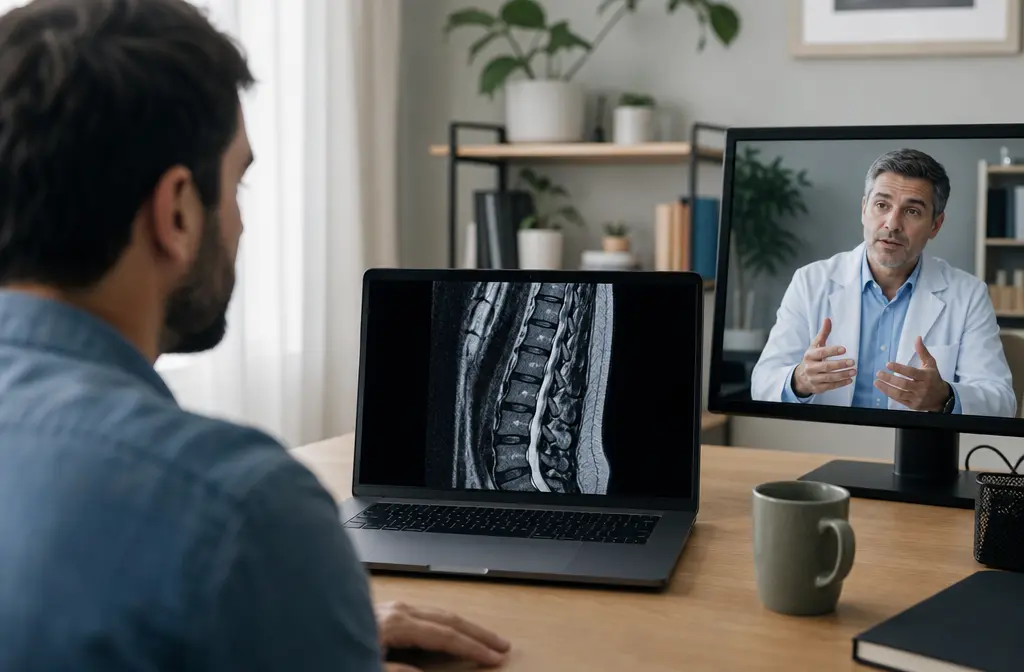
Quick Answer: A spine surgery second opinion is an independent review of your diagnosis, imaging, and surgical recommendation by a different spine specialist. You can get one entirely online through a virtual consultation, typically for $200 to $600, and the process usually takes 3 to 7 days from submission to written report. Research consistently shows that second opinions change the original surgical recommendation in a significant number of cases, often steering patients toward conservative treatment instead.
Key Takeaways
- A spine surgery second opinion can be obtained remotely by sharing your MRI/CT images and medical records with an independent specialist.
- Studies suggest that second opinions alter the treatment plan in roughly 40% to 60% of spine surgery cases, frequently recommending non-surgical alternatives.
- Online consultations cost between $200 and $600 out of pocket in most cases, though some insurers reimburse part or all of the fee.
- Anyone recommended for spinal fusion, discectomy, laminectomy, or decompression should strongly consider a second opinion before scheduling surgery.
- The process involves three core steps: gathering records, a virtual consultation or asynchronous review, and receiving a written independent opinion.
- Asking the right questions during your consultation can reveal whether surgery is truly necessary or whether you have viable alternatives.
- Getting a second opinion does not offend or undermine your original surgeon; it's a standard and expected part of responsible medical decision-making.
What Exactly Is a Spine Surgery Second Opinion?
A spine surgery second opinion is an evaluation by a qualified spine specialist who was not involved in your original diagnosis or surgical recommendation. The goal is simple: confirm whether surgery is the right path, or whether other treatments could work just as well.
This isn't about doubting your first doctor. It's about making sure a major, irreversible decision is backed by more than one expert perspective. Spine surgery carries real risks, including infection, nerve damage, failed back surgery syndrome, and the possibility that pain doesn't improve. A second set of eyes on your imaging and clinical history can catch diagnostic errors, identify overlooked conservative options, or confirm that surgery really is the best choice.
What a second opinion typically includes:
- Review of your MRI, CT, or X-ray images
- Assessment of your clinical history, symptoms, and prior treatments
- An independent diagnosis or confirmation of the original diagnosis
- A recommendation: proceed with the proposed surgery, consider a different surgical approach, or try non-surgical treatment first
A second opinion specialist may be an orthopedic spine surgeon, a neurosurgeon with spine fellowship training, or a physiatrist (physical medicine and rehabilitation doctor) depending on the nature of your condition.

Can I Get a Virtual Second Opinion Without Seeing a Doctor in Person?
Yes. Online spine surgery second opinions are widely available in 2026, and they don't require an in-person visit. Many spine centers and independent specialists now offer remote consultations through secure telemedicine platforms.
How the online process works, step by step:
- Submit your records. Upload your MRI or CT images (usually on a CD or through a DICOM viewer), radiology reports, surgical recommendation letters, and a summary of your symptoms and treatment history. Most platforms have a secure portal for this.
- Complete an intake questionnaire. You'll answer detailed questions about your pain levels, daily limitations, prior treatments (physical therapy, injections, medications), and what your surgeon recommended.
- The specialist reviews everything. A board-certified spine surgeon or spine specialist independently reviews your imaging and records. This asynchronous review typically takes 2 to 5 business days.
- Virtual consultation (if included). Some services include a live video call where you can discuss findings, ask questions, and get real-time answers. Others provide a written report only, with the option to add a video session for an extra fee.
- Receive a written opinion. You get a detailed report with the specialist's independent assessment, diagnosis, and treatment recommendation. This document can be shared with your original surgeon or used to guide your next steps.
Common mistake: Submitting only the radiology report without the actual images. The written report from a radiologist is helpful, but the reviewing surgeon needs to see the MRI or CT images themselves. Always request a copy of your imaging files from the facility where the scan was performed. In most countries, you have a legal right to your own medical images.
How Much Does an Online Spine Surgery Second Opinion Cost?
Most online spine surgery second opinions cost between $200 and $600 USD for an asynchronous review with a written report. Adding a live video consultation may push the total to $400 to $900, depending on the specialist and platform.
Is this worth it? Consider the comparison. The average cost of a spinal fusion in the United States ranges from $50,000 to over $150,000. In other countries, costs vary but the surgery is still a major financial event. A $300 to $600 second opinion that prevents an unnecessary $80,000 surgery is one of the best investments a patient can make.
Some patients also use the second opinion to confirm that surgery is indeed necessary, which gives them confidence and peace of mind before proceeding. Either way, the cost is small relative to the stakes.
Are Online Spine Surgery Second Opinions Covered by Insurance?
Coverage varies significantly by insurer and country. In the United States, many insurance plans cover in-person second opinions but may not cover telemedicine-based reviews from out-of-network specialists. In countries with national health systems (UK, Canada, Australia, parts of Europe), second opinions within the public system are typically free but may involve long wait times, which is one reason patients seek private online consultations.
Practical tips for insurance coverage:
- Call your insurer before booking and ask specifically about "second surgical opinion" benefits.
- Some insurers actually require a second opinion before approving expensive spine procedures. Check your plan documents.
- If the online consultation isn't covered, it may still qualify for reimbursement through a health savings account (HSA) or flexible spending account (FSA) in the US.
- Keep all receipts and the written opinion report, as some insurers will reimburse after the fact with proper documentation.
Edge case: If your insurance mandates a second opinion, they may require it to come from an in-network provider. An online consultation from an out-of-network specialist might not satisfy that requirement, even if it's clinically excellent. Verify this before you pay.
Who Should Definitely Get a Spine Surgery Second Opinion?
Anyone who has been told they need spine surgery should at least consider a second opinion. But certain situations make it especially important.
Get a second opinion if:
- You've been recommended for spinal fusion, particularly for degenerative disc disease or non-specific back pain. Fusion for these conditions is one of the most debated areas in spine surgery.
- Your surgeon recommends surgery but you haven't tried at least 6 to 12 weeks of conservative treatment (physical therapy, medication, injections).
- The diagnosis feels vague or rushed. If you left the consultation confused about exactly what's wrong, that's a signal.
- You have no neurological symptoms (numbness, weakness, loss of bladder/bowel control) but are being told surgery is urgent.
- Your MRI shows abnormalities, but your symptoms don't clearly match the imaging findings. MRI abnormalities are extremely common in people with no pain at all.
- You're being offered a complex or multi-level procedure (such as a 3- or 4-level fusion).
- You've already had one spine surgery and are being recommended for revision surgery.
Who might not need one: If you have a clear-cut surgical emergency, such as cauda equina syndrome (sudden loss of bladder control, severe leg weakness), progressive neurological deficit, or spinal cord compression with myelopathy, time matters more than a second opinion. In true emergencies, act quickly with the team available.
What Are the Red Flags That Mean You Need Another Surgeon's Perspective?
Several warning signs suggest your surgical recommendation deserves scrutiny from an independent specialist.
- The surgeon didn't discuss non-surgical options. Any ethical spine surgeon should explain what alternatives exist and why they believe surgery is superior in your case.
- You're being pressured to schedule quickly without a medical emergency. Phrases like "if you don't do this now, you'll end up in a wheelchair" are a red flag when there's no acute neurological deterioration.
- The recommended procedure seems disproportionate to your symptoms. A multi-level fusion for moderate back pain with no leg symptoms warrants careful questioning.
- Your surgeon can't clearly explain what the surgery will fix. You should be able to understand, in plain language, which structure is causing your pain and how the surgery addresses it.
- Conflicting information from your own research. If reputable medical sources suggest your condition often responds to conservative care, but your surgeon insists on surgery, a second opinion can clarify.
"A good surgeon will never be offended by a patient seeking a second opinion. If anything, it shows the patient is taking their health seriously." This is a principle I've seen echoed by spine specialists across multiple institutions.
How Do I Know If My Spine Condition Actually Requires Surgery?
Most spine conditions do not require surgery. Research consistently shows that the majority of back and neck pain episodes resolve or become manageable with conservative treatment within 6 to 12 weeks. Surgery is generally reserved for cases where there is a clear structural problem causing specific symptoms that haven't responded to non-surgical care.
Surgery is more clearly indicated when:
- You have progressive neurological deficits (worsening weakness, numbness, or loss of function)
- Conservative treatment has genuinely failed after an adequate trial (typically 3 to 6 months)
- Imaging findings correlate well with your specific symptoms
- You have spinal instability confirmed on dynamic imaging
- You have cauda equina syndrome or severe spinal cord compression
Surgery is less clearly indicated when:
- Your primary complaint is back pain alone without leg symptoms (for lumbar conditions)
- MRI findings are "age-appropriate" degenerative changes
- You haven't completed a structured physical therapy program
- Multiple imaging studies show different things, or findings are ambiguous
What Alternative Treatments Exist Before Spine Surgery?
Before committing to surgery, most patients should exhaust a reasonable course of conservative treatment. A spine surgery second opinion often identifies alternatives the patient hasn't fully tried.
- Structured physical therapy: Not just general exercise, but a targeted program supervised by a therapist experienced in spine rehabilitation. Programs like the McKenzie Method or motor control exercises have strong evidence for many spine conditions.
- Epidural steroid injections: These can reduce inflammation around compressed nerves and provide weeks to months of relief, sometimes enough for the underlying condition to improve.
- Oral medications: NSAIDs, nerve pain medications (gabapentin, pregabalin), and short courses of oral steroids can manage symptoms during recovery.
- Cognitive behavioral therapy and pain psychology: Chronic back pain has a significant psychological component. Addressing fear-avoidance behavior and catastrophizing can meaningfully reduce pain and disability.
- Spinal injections for diagnosis: Selective nerve root blocks can help confirm which nerve is actually causing your symptoms, which improves surgical planning if you do need an operation.
- Activity modification and ergonomic changes: Sometimes the solution is simpler than expected.
- Time: Many disc herniations naturally resorb over months. Patience, combined with symptom management, resolves many cases without surgery.
Risks of Getting Spine Surgery Without Multiple Professional Views
Proceeding with spine surgery based on a single opinion carries measurable risk. The most significant danger is undergoing an operation you didn't need.
Failed back surgery syndrome (FBSS) affects an estimated 10% to 40% of patients after lumbar spine surgery, depending on the procedure and patient selection. While not all cases are preventable, better patient selection through thorough evaluation, including second opinions, reduces the likelihood.
Specific risks of skipping a second opinion:
- Misdiagnosis: the wrong spinal level is identified, or the pain generator is actually a hip or sacroiliac joint problem
- Overtreatment: a fusion is performed when a simpler decompression would suffice
- Premature surgery: conservative options that could have worked were never adequately tried
- Unnecessary revision: the initial surgery was inappropriate, leading to additional procedures
A second opinion doesn't guarantee a perfect outcome, but it significantly reduces the chance of a preventable surgical error or an unnecessary procedure.
7 Questions to Ask During a Spine Surgery Second Opinion Consultation
These seven questions will help you get the most useful information from your second opinion, whether it's online or in person.
"Based on my imaging and symptoms, do you agree with the original diagnosis?"
This is the foundation. If the second specialist disagrees on what's causing your pain, the entire surgical plan may need to change."Is surgery the best option for my specific condition, or are there non-surgical treatments I should try first?"
Ask for specifics. Which conservative treatments, for how long, and what would success look like?"What happens if I don't have surgery?"
Understanding the natural history of your condition is critical. Will it get worse? Stay the same? Possibly improve on its own?"If you agree surgery is needed, would you recommend the same procedure, or a different approach?"
There may be less invasive options. A microdiscectomy instead of a fusion. An endoscopic approach instead of open surgery. A single-level procedure instead of multi-level."What are the realistic success rates for this surgery in someone with my specific condition?"
General success rates don't apply equally to every patient. Age, smoking status, obesity, psychological factors, and the specific pathology all influence outcomes."What are the most common complications, and what is the expected recovery timeline?"
You need honest numbers, not best-case scenarios."If I were your family member, what would you recommend?"
This question often elicits the most candid answer a doctor will give.
How Long Does a Typical Spine Surgery Second Opinion Take?
An online spine surgery second opinion typically takes 3 to 7 business days from the time you submit complete records to when you receive the written report. The live video consultation portion, if included, usually lasts 20 to 45 minutes.
Timeline breakdown:
- Record gathering and submission: 1 to 3 days (depends on how quickly you can obtain your imaging)
- Specialist review: 2 to 5 business days
- Written report delivery: same day as review completion or next business day
- Optional video consultation: scheduled within 1 to 2 weeks of submission
Some services offer expedited reviews for an additional fee, delivering opinions within 24 to 48 hours. If your situation is time-sensitive but not a true emergency, this can be worth the extra cost.
Common Mistakes People Make When Seeking a Spine Surgery Second Opinion
Even patients who wisely seek a second opinion sometimes undermine the process.
- Sending incomplete records. The second specialist can only be as good as the information they receive. Include all imaging, operative reports from prior surgeries, injection records, and physical therapy notes.
- Only seeking opinions that confirm what they want to hear. If you're determined to avoid surgery, you might dismiss a second opinion that agrees with the first. And if you're set on surgery, you might ignore a recommendation for conservative care. Try to approach the process with genuine openness.
- Choosing a second opinion doctor in the same practice or hospital system. Colleagues who work together may share biases or feel social pressure to agree. An independent specialist at a different institution provides a more objective perspective.
- Waiting too long. If you have progressive neurological symptoms, don't spend months collecting opinions. Get one good second opinion promptly and make a decision.
- Not asking about the specialist's own surgical volume and experience. A second opinion from a general orthopedic surgeon who rarely operates on spines is less valuable than one from a fellowship-trained spine specialist.
Where to Find Spine Surgeons Who Offer Online Second Opinion Consultations
Many major academic medical centers and private spine practices now offer telemedicine second opinions for international and domestic patients. Rather than naming specific providers (whose availability and quality can change), here's how to find a credible one:
- Academic medical centers: Institutions with dedicated spine surgery departments often have formal second opinion programs. Look for centers affiliated with universities.
- Professional society directories: Organizations like the North American Spine Society (NASS) or the AO Spine network maintain directories of fellowship-trained spine surgeons, many of whom offer virtual consultations.
- Telemedicine platforms specializing in second opinions: Several platforms connect patients with specialists from top institutions for remote reviews. Look for platforms that verify board certification and fellowship training.
- Your primary care doctor or physiotherapist: They may know reputable spine specialists who offer remote consultations and can make a direct referral.
Choose a specialist if: they are fellowship-trained in spine surgery (orthopedic or neurosurgical), they practice at an institution independent from your original surgeon, and they have experience with your specific condition.
Frequently Asked Questions
Will my original surgeon be upset if I get a second opinion?
No. Experienced surgeons expect and welcome second opinions, especially for major procedures. If a surgeon reacts negatively to you seeking another perspective, that itself is a red flag.
Can I get a spine surgery second opinion from a doctor in another country?
Yes. Online consultations make international second opinions straightforward. Make sure the specialist is board-certified in their country and has fellowship training in spine surgery. Language barriers and differences in medical systems are worth considering.
Do I need a new MRI for a second opinion?
Usually not, as long as your existing MRI is recent (within the last 6 to 12 months) and of adequate quality. The reviewing specialist will tell you if new imaging is needed.
What if the second opinion disagrees with the first?
This is common and valuable. You can discuss the conflicting recommendations with both doctors, seek a third opinion if needed, or use the information to make a more informed decision. Disagreement doesn't mean one doctor is wrong; it often reflects genuine uncertainty in the evidence.
Is an online second opinion as reliable as an in-person one?
For most spine conditions, yes. The key information a specialist needs is your imaging, your symptom history, and your prior treatment record, all of which can be transmitted digitally. The main limitation is that the remote doctor cannot perform a hands-on physical examination, but for a second opinion (not a pre-surgical evaluation), this is rarely a barrier.
How many second opinions should I get?
One thorough second opinion from a qualified, independent specialist is usually sufficient. If the first and second opinions conflict significantly, a third opinion can serve as a tiebreaker. Getting more than three opinions rarely adds clarity and can lead to decision paralysis.
Conclusion
A spine surgery second opinion is one of the most practical steps you can take after receiving a surgical recommendation. The process is straightforward: gather your imaging and records, submit them to an independent specialist, and receive a written assessment, all without leaving your home.
The cost is modest compared to the financial, physical, and emotional toll of unnecessary surgery. And the evidence consistently shows that second opinions change the treatment plan in a meaningful percentage of cases, often toward less invasive options.
Your next steps:
- Request copies of your MRI/CT images and radiology reports from your imaging center.
- Compile your medical records, including the surgical recommendation letter and notes from prior treatments.
- Choose an independent, fellowship-trained spine specialist who offers online consultations.
- Submit your records and schedule your second opinion.
- Use the 7 questions listed above to guide your consultation.
- Make your decision with confidence, knowing it's backed by more than one expert perspective.
If you're considering starting an online spine surgery second opinion consultation, the process is easier than most patients expect, and the peace of mind it provides is worth every minute.