
Quick Answer: Spinal fusion is genuinely necessary for a narrow set of conditions: confirmed spinal instability, progressive spondylolisthesis, certain fractures, tumors, and significant deformity. For many patients with back pain alone, however, the question "is spinal fusion necessary" deserves a careful, honest answer — and that answer is often not yet or not at all. Getting an independent second opinion before agreeing to fusion surgery is one of the smartest moves you can make for your spine and your life.
Key Takeaways
- Spinal fusion has clear indications (instability, deformity, fractures, tumors) but is frequently recommended for conditions where non-surgical treatment or less invasive surgery may work just as well.
- Up to 50% of spinal fusions performed for degenerative disc disease alone may not produce better outcomes than structured conservative care, according to multiple randomized trials.
- Recovery from lumbar fusion typically takes 3 to 12 months before you can return to full activity, and some patients never reach their pre-pain baseline.
- Failed back surgery syndrome affects an estimated 10–40% of spinal surgery patients, making the decision to operate one you should not rush.
- A second opinion from an independent spine specialist — someone with no financial incentive to operate on you — is the single most important step before scheduling fusion.
- Alternatives like decompression alone, artificial disc replacement, and structured physical therapy deserve serious consideration for many diagnoses.
- The questions you ask your surgeon matter as much as the answers you receive.
What Exactly Is Spinal Fusion Surgery?
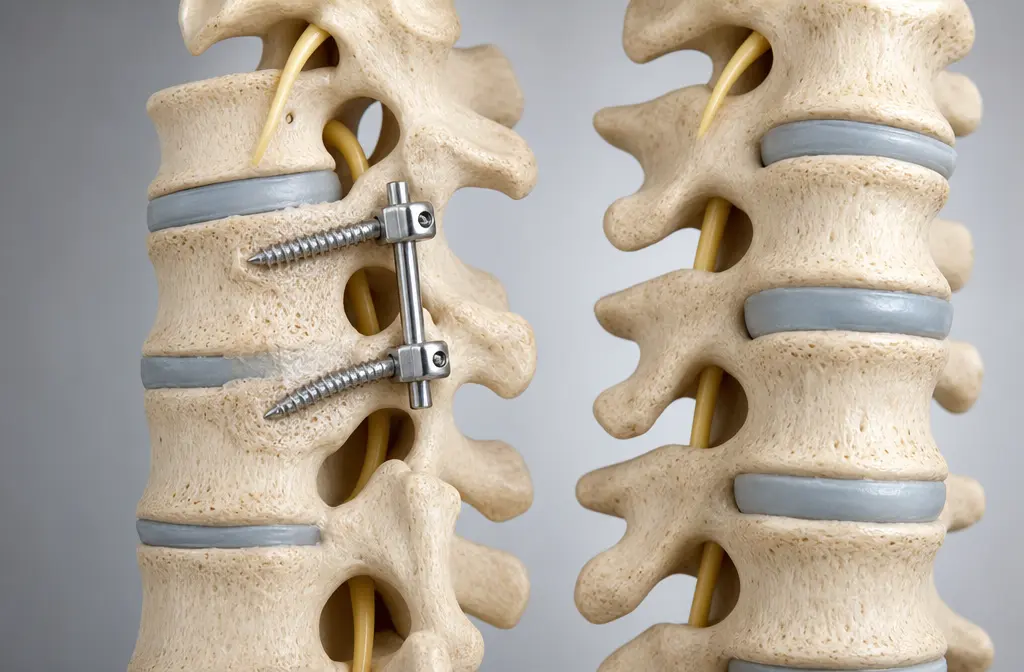
Spinal fusion is a surgical procedure that permanently joins two or more vertebrae so they heal into a single, solid bone. The goal is to eliminate painful motion at a damaged spinal segment.
During the operation, a surgeon places bone graft material (your own bone, donor bone, or a synthetic substitute) between the vertebrae. Metal hardware — screws, rods, plates, or cages — holds everything in place while the bone grows together over several months. The surgery can be performed from the front (anterior), back (posterior), side (lateral), or a combination.
Key point: Fusion trades spinal motion for stability. That lost motion shifts extra stress to the segments above and below, which is why long-term consequences matter.
What Conditions Typically Require Spinal Fusion?
Fusion is most clearly indicated when structural instability or progressive deformity threatens the spinal cord, nerves, or overall spinal alignment. The strongest indications include:
- Spondylolisthesis with instability — one vertebra slips forward on another and moves abnormally with bending
- Spinal fractures — unstable fractures from trauma, osteoporosis, or metastatic cancer
- Spinal tumors — when removing a tumor leaves the spine structurally compromised
- Significant scoliosis or kyphosis — progressive curves causing pain, imbalance, or nerve compression
- Recurrent disc herniation with instability — after prior decompression when the segment is no longer stable
- Infection (osteomyelitis/discitis) — after debridement when the vertebral body is destroyed
Where it gets murky: Degenerative disc disease (DDD) with back pain but no instability. This is the single largest area of disagreement among spine surgeons worldwide. Some fuse aggressively for DDD; others almost never do.
How Do I Know If My Spine Problem Is Serious Enough for Surgery?
A spine problem is serious enough for fusion when there is documented structural instability or progressive neurological loss that conservative treatment cannot address.
Ask yourself and your doctor these questions:
- Is there measurable instability on flexion-extension X-rays? If the vertebrae shift more than 3–4 mm with movement, that's objective instability.
- Am I losing neurological function? Worsening leg weakness, foot drop, or loss of bladder/bowel control are urgent red flags.
- Have I completed at least 6–12 months of quality conservative care? This means guided physical therapy, not just a few stretches at home.
- Does my imaging match my symptoms? Many people over 40 have disc degeneration on MRI but zero pain. Abnormal imaging alone is not a reason for surgery.
Common mistake: Agreeing to fusion based on an MRI report without confirming that the imaging findings actually explain your specific pain pattern.
Is Spinal Fusion Necessary, or Can I Avoid It With Physical Therapy?
For many patients with chronic low back pain and no instability, structured physical therapy produces outcomes comparable to fusion at two-year follow-up. Several well-designed trials — including the Swedish Lumbar Spine Study and the UK MRC Spine Stabilisation Trial — found that intensive rehabilitation programs achieved similar pain and disability scores as fusion for patients with degenerative disc disease.
Physical therapy is most likely to succeed when:
- Your pain is primarily axial (in the back, not radiating down the legs)
- You have no structural instability on imaging
- You haven't yet completed a supervised, progressive exercise program lasting at least 12 weeks
- You are willing to commit to long-term core strengthening and lifestyle changes
Physical therapy is less likely to be enough when:
- You have confirmed spondylolisthesis with progressive slip
- There is worsening neurological deficit
- You have a spinal fracture or tumor
- You've completed 6+ months of quality rehab with no improvement
Decision rule: If you haven't done at least 3 months of supervised, spine-specific physical therapy, it is too early to decide whether spinal fusion is necessary.
Alternatives to Spinal Fusion for Back Pain
Fusion is not the only surgical option, and surgery is not the only path forward. Here's how the main alternatives compare:
Important: Decompression alone (removing bone or disc material pressing on nerves) is a far less invasive surgery than fusion and has a shorter recovery. For conditions like lumbar spinal stenosis without instability, decompression without fusion often produces excellent results.

Who Is a Good Candidate for Spinal Fusion?
The best candidates for spinal fusion share several characteristics: a clear structural problem that matches their symptoms, failure of appropriate conservative treatment, realistic expectations, and overall health sufficient to tolerate surgery and recovery.
You are likely a good candidate if:
- You have confirmed instability (spondylolisthesis with motion, unstable fracture)
- Neurological symptoms are worsening despite non-surgical care
- Your pain source has been confirmed through imaging, diagnostic injections, or both
- You are a non-smoker or willing to quit (smoking dramatically increases fusion failure rates)
- You understand that fusion aims to reduce pain, not eliminate it entirely
You may not be a good candidate if:
- Your primary problem is back pain with no instability and normal neurological exams
- You smoke and are unwilling to stop
- You have significant untreated depression or anxiety (these strongly predict poor surgical outcomes)
- You are seeking a "quick fix" without willingness to do post-operative rehabilitation
- Multiple prior spine surgeries have not helped
Risks and Complications of Spinal Fusion
Spinal fusion is major surgery, and patients deserve a clear picture of what can go wrong.
Short-term risks:
- Infection (2–5% of cases)
- Blood clots
- Nerve damage causing new weakness or numbness
- Dural tear (spinal fluid leak)
- Hardware failure (screws loosening or breaking)
Long-term risks:
- Adjacent segment disease: The fused segment no longer moves, so the discs above and below absorb extra stress. Studies suggest roughly 2–3% of patients per year develop symptomatic adjacent segment problems, and some will need additional surgery.
- Pseudarthrosis (non-union): The bone graft fails to fuse. Smoking is the single biggest risk factor.
- Chronic pain despite solid fusion: A technically successful fusion does not guarantee pain relief.
- Failed back surgery syndrome (FBSS): Persistent or worsening pain after spine surgery. Estimates vary, but 10–40% of patients who undergo spinal surgery report ongoing significant pain.
"The best spine surgery is the one you didn't need." This saying circulates among spine surgeons for a reason. Once you fuse a segment, you cannot un-fuse it.
How Long Does Spinal Fusion Surgery Take?
A single-level lumbar fusion typically takes 2 to 4 hours. More complex procedures — multi-level fusions, revision surgeries, or combined anterior-posterior approaches — can take 4 to 8 hours or longer.
Factors that affect operative time:
- Number of levels being fused
- Surgical approach (minimally invasive techniques may take longer but cause less tissue damage)
- Whether decompression is also needed
- Patient body habitus and prior surgical scarring
- Surgeon experience
Hospital stay is usually 1 to 4 days for a standard lumbar fusion, though some minimally invasive approaches allow discharge within 24 hours.
Recovery Time After Spinal Fusion Surgery
Most patients need 3 to 6 months before returning to desk work and light activities, and 6 to 12 months before the fusion is fully solid and they can resume physically demanding tasks.
Typical recovery timeline:
- Weeks 1–2: Walking short distances, managing post-operative pain, wound care
- Weeks 2–6: Gradually increasing walking distance, avoiding bending/lifting/twisting
- Weeks 6–12: Beginning guided physical therapy, light daily activities
- Months 3–6: Returning to desk work, driving, gentle exercise
- Months 6–12: Progressive strengthening, possible return to more physical work
- 12+ months: Maximum improvement typically reached by 1–2 years
Reality check: Many patients feel significantly better by 3 months, but others describe the first year as genuinely difficult. Recovery depends heavily on your fitness before surgery, the complexity of the procedure, your age, and whether you follow the rehabilitation program.
Success Rates for Different Types of Spinal Fusion
Success depends entirely on why the fusion was done.
- Fusion for spondylolisthesis with instability: Approximately 80–90% of patients report significant improvement in pain and function.
- Fusion for spinal stenosis with instability: Similar range, around 75–85% good outcomes.
- Fusion for degenerative disc disease (pain only, no instability): Success rates drop to roughly 60–70%, and some studies show rates closer to 50% when compared against structured rehabilitation.
- Fusion for fractures: High structural success rate (over 90% union), though pain outcomes depend on the injury.
The pattern is clear: When there is a well-defined structural problem, fusion works well. When the main indication is pain without clear instability, results are far less predictable.
Long-Term Outcomes of Spinal Fusion After 10 Years
At 10 years, most patients with a solid fusion for a clear indication maintain their improvement. However, adjacent segment disease becomes a growing concern over time.
Published long-term follow-up data suggests:
- Roughly 20–35% of patients develop radiographic (visible on imaging) adjacent segment degeneration within 10 years
- About 10–15% develop symptomatic adjacent segment disease requiring treatment
- A subset of these patients (perhaps 5–10% of the original group) need additional surgery
Patients fused at younger ages and those with multi-level fusions face higher long-term risks of adjacent segment problems. This is one reason why preserving motion through alternatives like artificial disc replacement or decompression alone is appealing when the diagnosis allows it.
Common Mistakes Patients Make Before Spinal Fusion
- Rushing into surgery after one consultation. A single surgeon's opinion is just that — one opinion. Spine surgery recommendations vary significantly between surgeons.
- Not completing quality conservative care. A few weeks of generic exercises is not the same as 3–6 months of supervised, progressive spine rehabilitation.
- Choosing a surgeon based on convenience rather than expertise. Spine fusion outcomes are strongly influenced by surgical volume and experience.
- Ignoring psychological factors. Depression, anxiety, catastrophizing, and unresolved workers' compensation disputes all predict worse surgical outcomes. Addressing these before surgery improves results.
- Not asking about alternatives. If your surgeon only offers fusion and doesn't discuss decompression alone, disc replacement, or continued conservative care, that's a red flag.
- Smoking through the process. Nicotine constricts blood vessels and directly impairs bone healing. Fusion failure rates roughly double in active smokers.
How Much Does Spinal Fusion Cost Without Insurance?
Spinal fusion costs vary enormously by country and facility. Without insurance, a single-level lumbar fusion in the United States can range from $50,000 to $150,000 or more, including hospital, surgeon, anesthesia, and implant fees.
Approximate cost ranges by region (estimates, single-level fusion):
These are rough estimates and vary by hospital, surgeon, implant type, and complexity. Public healthcare systems in many countries cover medically indicated fusions, but waiting times can be long.
Cost should never be the primary factor in deciding whether spinal fusion is necessary, but it is a legitimate consideration, especially for patients paying out of pocket or traveling abroad for care.
The Checklist: Questions to Ask Your Surgeon Before Agreeing to Fusion
Before you schedule surgery, bring this list to your appointment:
- What is the specific structural problem you are fusing for? (Get a clear answer, not just "degenerative disc disease.")
- Is there documented instability on dynamic imaging?
- Have I exhausted appropriate non-surgical treatment?
- Would decompression alone (without fusion) address my symptoms?
- Am I a candidate for artificial disc replacement instead?
- What is the expected success rate for someone with my specific diagnosis?
- What are the main risks in my case?
- How many of these procedures do you perform per year?
- What happens if the fusion doesn't relieve my pain?
- Would you recommend this surgery for your own family member with the same findings?
If your surgeon is uncomfortable with any of these questions, or dismisses your desire for a second opinion, consider that a significant warning sign.
Why a Second Opinion Is Worth It — Every Time
Getting a second opinion before spinal fusion is not an insult to your surgeon. It's standard practice and any confident, ethical surgeon will encourage it.
Here's why it matters:
- Studies have shown that second opinions change the treatment plan in 20–40% of spine surgery cases.
- A second surgeon may identify a less invasive option your first surgeon didn't offer.
- Different surgeons have different training, experience, and biases. A surgeon who primarily does fusions will tend to recommend fusion. A surgeon who specializes in motion-preserving techniques may offer alternatives.
- An independent opinion from someone who won't be performing your surgery removes financial conflict of interest.
Online second opinions have become increasingly accessible in 2026. Many academic spine centers and independent specialists now review your imaging and records remotely, providing a written opinion within days. This is especially valuable for patients in regions with limited access to subspecialty spine care.
Bottom line: If someone recommends permanently fusing part of your spine, spending a few weeks getting another perspective is not a delay — it's due diligence.
Frequently Asked Questions
Is spinal fusion necessary for a herniated disc?
Rarely. Most herniated discs improve with conservative care (physical therapy, medications, time). If surgery is needed, a discectomy (removing the herniated fragment) is usually sufficient without fusion, unless there is associated instability.
How do I know if my surgeon is recommending fusion unnecessarily?
Red flags include: recommending fusion based on MRI findings alone without correlating to your symptoms, not discussing non-surgical alternatives, not mentioning decompression-only options, and discouraging you from seeking a second opinion.
Can spinal fusion be reversed?
No. Once the vertebrae have fused into solid bone, the procedure is permanent. Hardware can be removed in some cases, but the fused bone remains fused.
Is minimally invasive spinal fusion better than open fusion?
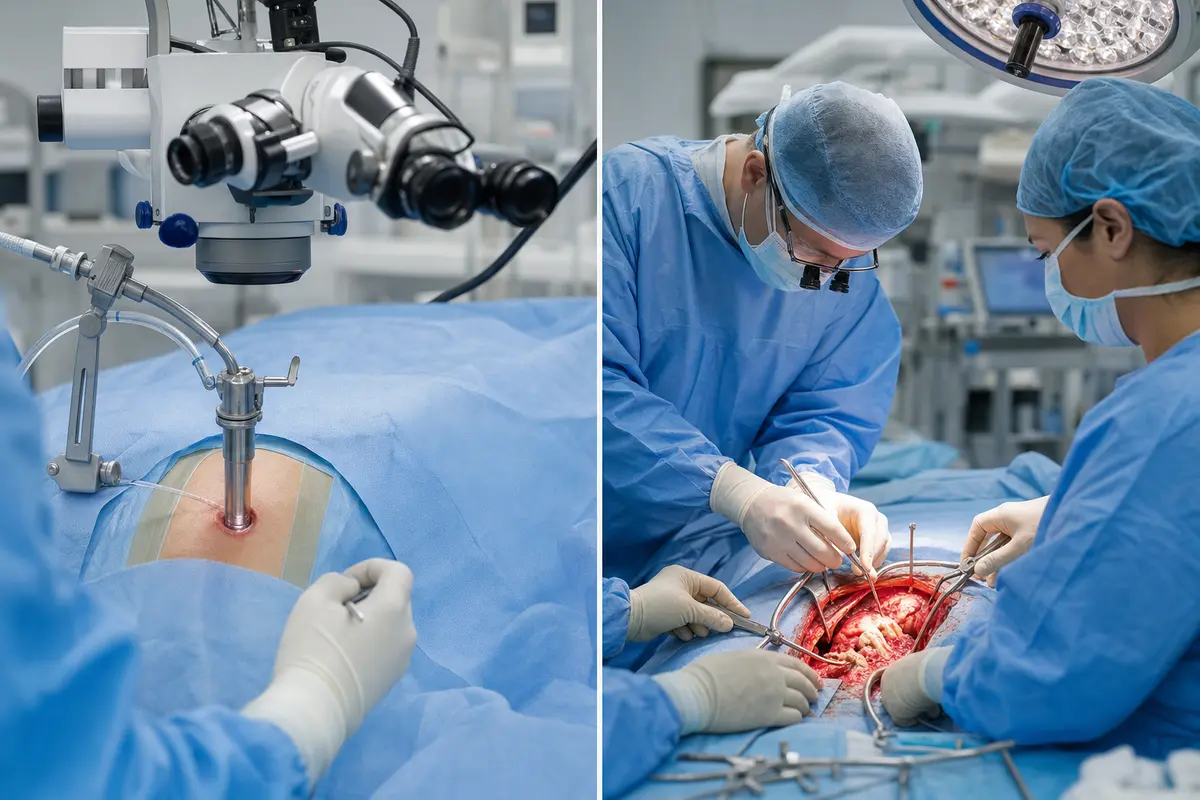
Minimally invasive techniques generally result in less blood loss, shorter hospital stays, and faster early recovery. Long-term fusion rates and pain outcomes appear similar. The best approach depends on your specific anatomy and diagnosis.
What is the average age for spinal fusion surgery?
Spinal fusion is most commonly performed in patients aged 50 to 70, but it can be appropriate at any age depending on the condition. Younger patients should be especially cautious because they will live with the long-term consequences (including adjacent segment stress) for more decades.
Does spinal fusion limit my activity permanently?
Most patients return to normal daily activities after recovery. High-impact sports and heavy manual labor may be restricted. Many patients golf, swim, hike, and exercise regularly after fusion, though expectations should be discussed with your surgeon before the procedure.
Conclusion
The question "is spinal fusion necessary" doesn't have a universal answer — it depends entirely on your specific diagnosis, the severity of your structural problem, and whether you've genuinely explored the alternatives. Fusion is a powerful tool when used for the right reasons: true instability, progressive deformity, fractures, and tumors. But for back pain alone, without clear structural instability, the evidence for fusion over quality conservative care is far weaker than many patients realize.
Your action steps:
- Get clear on your diagnosis. Ask your surgeon to explain exactly what structural problem the fusion would fix.
- Complete quality conservative care first — at least 3 to 6 months of supervised physical therapy if your condition allows it.
- Use the checklist above at your next surgical consultation.
- Get an independent second opinion before scheduling any fusion. This is the single most valuable thing you can do. Consider an online second opinion if local options are limited.
- Address the whole picture — optimize your weight, quit smoking, treat depression or anxiety, and commit to rehabilitation regardless of whether you choose surgery.
Your spine has to last the rest of your life. Take the time to make this decision carefully.