Last updated: 7 June 2026
Quick Answer
Back surgery is genuinely necessary in a small minority of cases: progressive neurological deficit, cauda equina syndrome, significant spinal instability, infection, tumour, or major trauma. For most back pain, including many disc herniations and degenerative findings on MRI, surgery is elective and should follow at least 6–12 weeks of structured conservative care. If an operation has been recommended to you, an independent second opinion is reasonable, often clarifying, before you commit.
Key Takeaways
- Fewer than 10% of patients with back pain ultimately need surgery; most improve with time and conservative care.
- Absolute (red-flag) indications include cauda equina syndrome, progressive motor weakness, spinal infection, tumour, and unstable fractures.
- Pain alone, even severe pain, is rarely an emergency indication for surgery.
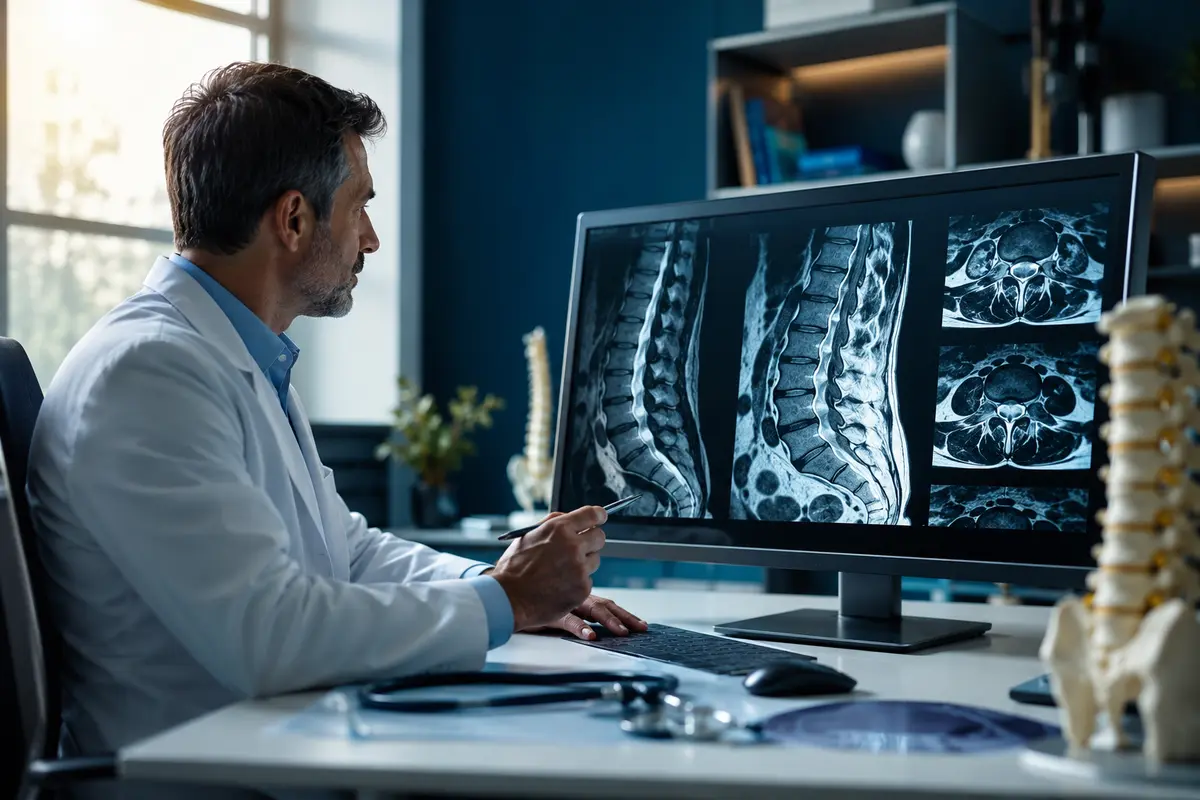
- MRI findings often look alarming but correlate poorly with symptoms. Imaging must match the clinical picture.
- Conservative care (physiotherapy, targeted injections, activity modification, medication) resolves the majority of disc herniations and mechanical back pain within 6–12 weeks.
- Age is not, by itself, a reason to avoid or to choose surgery. Biological health and goals matter more.
- A second opinion before any elective spine operation is standard practice in many European centres and is encouraged.
- The most common mistake is consenting to fusion surgery for non-specific back pain without a clear structural target.
What are the signs that I definitely need back surgery?
There are a defined set of situations where surgery is not optional. As a spine surgeon practising in Germany, I treat these as red flags that warrant urgent assessment, often within hours, not weeks.
Absolute indications for spine surgery:
- Cauda equina syndrome: sudden loss of bladder or bowel control, saddle-area numbness, bilateral leg weakness. This is a surgical emergency.
- Progressive motor weakness: a foot drop that is worsening, or measurable loss of strength in a limb due to nerve compression.
- Spinal infection (discitis, epidural abscess): especially with fever, raised inflammatory markers, and neurological signs.
- Spinal tumour causing cord compression or instability.
- Unstable spinal fracture, particularly with neurological involvement or significant deformity.
- Myelopathy from cervical cord compression with worsening hand clumsiness, gait disturbance, or balance loss.
If none of these apply to you, your situation is almost certainly not an emergency, and you have time to think, get a second opinion, and trial non-surgical care.
How do I know if my back pain requires an operation?
Most back pain does not require an operation. The honest test is whether your symptoms, examination, and imaging line up to point at a specific, surgically correctable problem, and whether conservative care has had a fair trial.
I use a simple four-part check:
- Is there a clear structural cause on imaging that explains the symptoms? A disc herniation on the left at L5–S1 should match left-sided sciatica down the calf, not vague low back ache.
- Has conservative treatment been given a proper trial? Usually 6–12 weeks of physiotherapy, activity modification, and appropriate medication, sometimes with a targeted injection.
- Is there a neurological deficit? Weakness, reflex changes, or sensory loss that fits the imaging.
- Is the patient's quality of life genuinely impaired despite best non-surgical efforts?
If the answer to all four is yes, surgery becomes a reasonable option. If even one is uncertain, slow down.
Pull quote: "An MRI report is not a diagnosis. The patient in front of me is the diagnosis. The scan only helps confirm it."
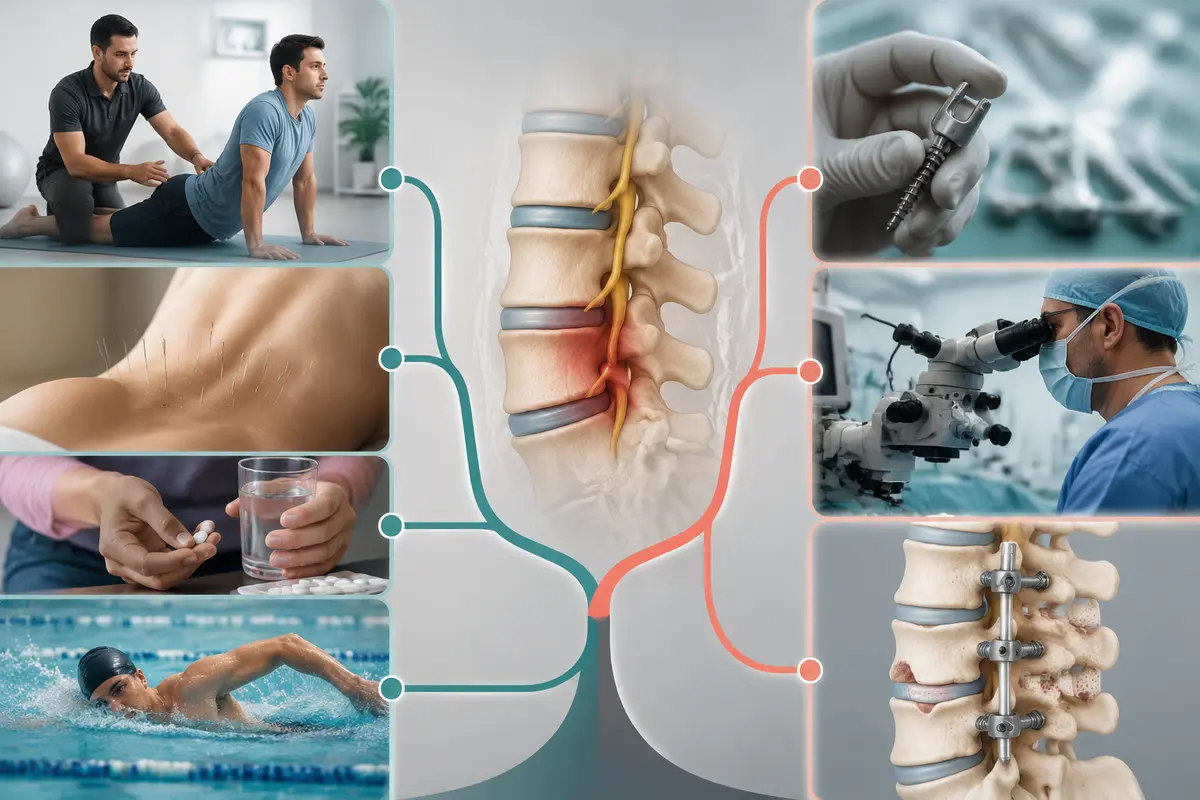
Conservative treatments vs surgery for back problems
For most back conditions, conservative care should come first and is often sufficient. Surgery is generally a second-line option for elective cases.
What conditions always need surgical intervention?
Very few spinal conditions always need surgery, but a short list comes close.
- Cauda equina syndrome (emergency).
- Acute spinal cord compression from trauma, tumour, abscess, or central disc herniation with neurology.
- Unstable fractures, particularly with cord involvement.
- Progressive cervical myelopathy typically requires surgery to halt decline, though timing can be discussed.
- Spinal deformity causing cardiopulmonary compromise or rapidly progressing in skeletally immature patients.
- Tumours causing instability or neurological compromise.
Outside this list, terms like "needs surgery" are almost always an opinion, not a fact. Reasonable surgeons can disagree on borderline cases. That is precisely why second opinions exist.
How much does back surgery typically cost?
Costs vary enormously by country, healthcare system, hospital category, and the specific procedure. I won't quote figures here because they are misleading without context, and they change.
What I can say:
- In most European public systems (Germany, UK, Netherlands, Scandinavia), medically indicated spine surgery is covered.
- Private and international patients should ask for an itemised quote covering surgeon fees, anaesthetic, implants, hospital stay, and rehabilitation.
- A microdiscectomy is substantially less expensive than an instrumented fusion, which involves screws, rods, and cages.
- Cheaper is not safer. Volume and experience of the surgeon and centre matter more than headline price.
If cost is a major factor, that itself is a strong argument for a second opinion before booking.
Risks and recovery time for different back surgeries
Every spine operation carries real risks: infection, bleeding, nerve injury, dural tear, recurrent herniation, hardware problems, adjacent segment degeneration, and the risk that pain does not improve. No surgeon can guarantee an outcome.
Rough recovery patterns (individual results vary):
- Microdiscectomy: back to light office work in 2–4 weeks; full activity in 6–12 weeks.
- Lumbar decompression (laminectomy) for stenosis: walking the same day; meaningful recovery over 6–12 weeks.
- Single-level lumbar fusion: 3–6 months for substantial recovery; bony fusion takes 6–12 months.
- Cervical disc replacement or ACDF: soft diet and reduced activity for 2–6 weeks; most return to desk work within a month.
Smoking, diabetes, obesity, and untreated osteoporosis all worsen outcomes. Optimising these before elective surgery is genuinely worthwhile.
Can younger people get back surgery, or is it mostly for older patients?
Spine surgery is performed across all adult ages, and in selected paediatric cases. Age is a factor, not a barrier.
- Younger patients (20s–40s) more often present with disc herniations, isthmic spondylolisthesis, or sports-related injuries. Microdiscectomy in this group has reliable results when indicated.
- Middle-aged adults (40s–60s) see more degenerative disc disease and early stenosis. Decision-making here is the most nuanced because MRI changes are common but not always symptomatic.
- Older adults (60s+) more often need decompression for stenosis. Biological fitness matters more than chronological age. A healthy 78-year-old often does better than a sedentary 58-year-old with multiple comorbidities.
The real question is never "am I too young or too old?" but "does the benefit clearly outweigh the risk in my specific case?"
What happens if I wait too long to get back surgery?
For elective indications, waiting is usually safe and often helpful, because many problems resolve. For red-flag indications, delay can cause permanent harm.
When waiting is reasonable:
- Sciatica without significant weakness, improving over weeks
- Mechanical back pain without neurological signs
- Stenosis where you can still walk a useful distance
When waiting is risky:
- Cauda equina symptoms: hours matter
- Progressive weakness: days to weeks
- Cervical myelopathy: weeks to months; deficits often do not recover fully even after surgery
- Infection or tumour: urgent
A useful rule: pain can wait, weakness cannot.
Common mistakes people make before deciding on back surgery
Over years of second opinions, the same patterns appear.
- Treating the MRI, not the patient. Bulges and degeneration are common in pain-free adults.
- Skipping a structured physiotherapy programme and jumping to surgery.
- Consenting to fusion for non-specific back pain without a clear structural target.
- Not seeking a second opinion when fusion or multi-level surgery is proposed.
- Ignoring modifiable factors: smoking, deconditioning, sleep, weight, mental health.
- Choosing the surgeon based only on geography rather than relevant experience.
- Underestimating recovery. Even successful surgery requires months of rehabilitation.
Alternative treatments to avoid back surgery
Most patients can avoid surgery with a combination of evidence-based non-surgical strategies.
- Structured physiotherapy focused on movement, strength, and graded activity, not passive treatment alone
- Cognitive behavioural approaches for chronic pain, supported by NICE guidance
- Targeted injections (epidural, facet, nerve root) for diagnostic clarity and short-term relief
- Medical optimisation: addressing osteoporosis, vitamin D, diabetes, weight
- Lifestyle: stopping smoking, improving sleep, gradually increasing aerobic activity
- Time. Disc herniations frequently shrink on follow-up imaging without any intervention.
Treatments with weaker evidence, that I would not rely on as primary care: spinal manipulation for radiculopathy, prolonged bed rest, opioid-based long-term pain management, and most "regenerative" injections marketed for disc disease.
How do I know if my specific back injury needs surgery?
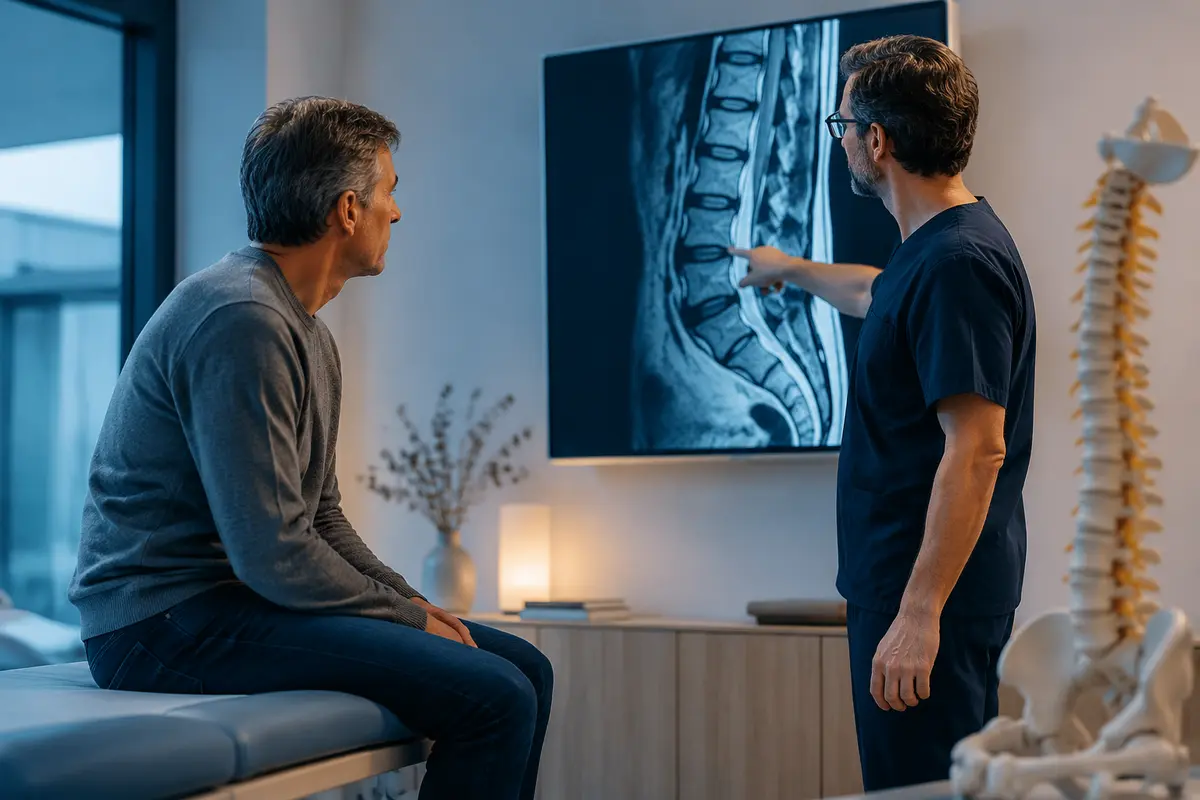
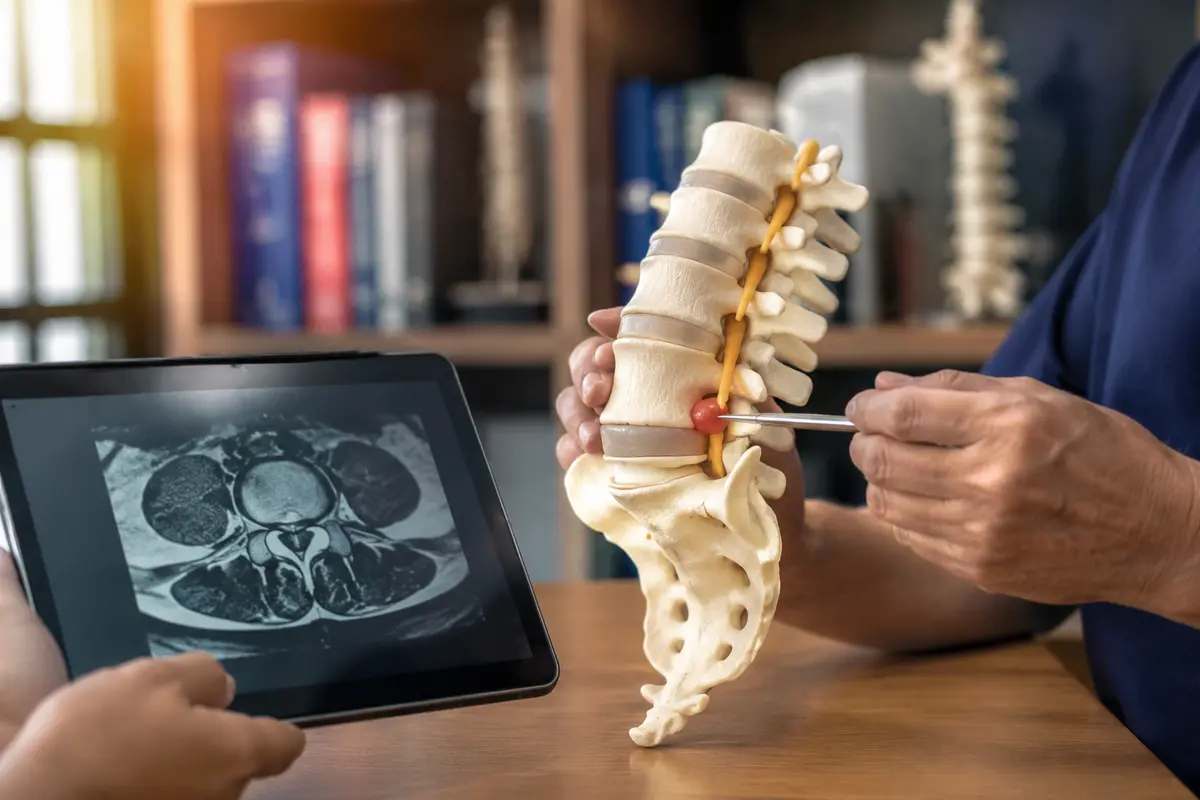
You cannot know this from an article. You can, however, prepare to have a better conversation with a surgeon.
Bring to your consultation:
- A clear timeline of symptoms
- A list of treatments already tried and for how long
- Your imaging (MRI is more useful than X-ray for most soft-tissue questions)
- Specific functional goals (walk 30 minutes, return to work, lift a child)
- Questions about alternatives, risks, and what happens if you do nothing
If your surgeon cannot clearly explain why surgery is the best option for your specific case, or dismisses non-surgical alternatives, that is a reasonable trigger to seek an independent second opinion. An online second opinion from a different country or system can be particularly useful for elective cases.
What percentage of back pain actually requires surgical treatment?
The widely cited figure across population studies and guideline summaries (including NICE and major spine society reviews) is that roughly 5–10% of patients presenting with back pain ultimately need surgical treatment. The remaining 90%+ recover with conservative care, time, or learn to manage their symptoms effectively.
This is one of the most important numbers in spine care, and it is rarely communicated to patients.
Warning signs that my back problem is serious
Seek urgent medical assessment if you have any of the following:
- New loss of bladder or bowel control
- Numbness in the groin or saddle area
- Sudden, significant leg weakness, or a foot you cannot lift
- Unexplained fever with back pain
- Severe night pain not relieved by position change
- A history of cancer with new back pain
- Significant trauma (fall, accident)
- Unexplained weight loss with back pain
- Worsening hand clumsiness, dropping objects, or unsteady walking
These do not all mean surgery, but they all mean prompt evaluation.
FAQ
Is back surgery ever truly an emergency?
Yes, but rarely. Cauda equina syndrome, acute cord compression, progressive weakness, spinal infection, and unstable fractures are genuine emergencies. Most back surgery is elective.
Will my disc herniation get worse if I don't operate?
Usually not. A significant proportion of herniated discs reduce in size on follow-up MRI within 6–12 months, even without surgery, especially larger extrusions.
Should I get a second opinion before spine surgery?
Yes, particularly for elective fusion or multi-level procedures. An independent second opinion, including online, is standard practice and frequently changes the recommended plan.
Does a "bad" MRI mean I need surgery?
No. MRI findings such as disc bulges, degeneration, and even herniations are common in people with no pain at all. Imaging must match symptoms.
Can I make surgery safer if I do decide to go ahead?
You can improve your odds by stopping smoking, optimising weight and blood sugar, treating osteoporosis if present, building baseline fitness, and choosing an experienced surgeon and centre.
What if two surgeons disagree?
That is common and not a sign that one is wrong. It usually reflects a grey-zone case. A third independent opinion, or shared decision-making with your primary care doctor, helps.
Conclusion
When is back surgery necessary? Honestly, far less often than many patients are led to believe. A small group of conditions demand urgent surgery, and ignoring those warning signs causes real harm. Most other situations are elective, which means you have time: time for conservative care, time to think, and time to seek a second opinion.
Practical next steps:
- Rule out red flags. If any are present, get urgent assessment today.
- If not, commit to 6–12 weeks of structured conservative care.
- Match your symptoms to your imaging, not your imaging to your fears.
- Before consenting to any elective spine operation, particularly fusion, get an independent second opinion.
- Optimise the modifiable factors: smoking, weight, fitness, sleep, mental health.
This article is educational and does not replace an in-person evaluation. If surgery has been recommended to you and you'd like an independent review of your case, an online spine second opinion is one straightforward way to make sure the plan in front of you is the right one for you.