Quick Answer: Spondylolisthesis treatment depends on how far the vertebra has slipped (the grade), whether the slip is stable, and how severe your symptoms are. Most people with a low-grade slip (Grade I or II) improve significantly with conservative care such as physiotherapy, activity modification, and pain management. Surgery, typically spinal fusion, is generally reserved for high-grade slips, progressive neurological deficits, or cases that fail to respond to at least three to six months of non-surgical treatment.
Key Takeaways
- Spondylolisthesis means one vertebra has slipped forward over the one below it. It is graded I through V based on the percentage of slippage.
- Grade I and II slips account for the large majority of cases and usually respond well to non-surgical treatment.
- Core stabilisation exercises, guided by a physiotherapist, are the cornerstone of conservative care.
- Surgery (most often spinal fusion) is indicated when there is significant instability, progressive nerve damage, or persistent symptoms despite adequate conservative treatment.
- High-impact sports and heavy extension-based exercises should generally be avoided or modified.
- Teenagers, particularly young athletes, commonly develop a type called isthmic spondylolisthesis and usually do well without surgery.
- An independent second opinion before agreeing to spinal surgery can help you confirm the diagnosis, understand your options, and avoid unnecessary procedures.
- Recovery after fusion surgery typically takes three to six months for a return to daily activities, though full healing of the bone graft can take up to a year.
- Leaving a high-grade or unstable slip untreated may lead to worsening pain, nerve compression, or loss of bladder and bowel function in rare cases.
What Exactly Is Spondylolisthesis and How Does It Happen?
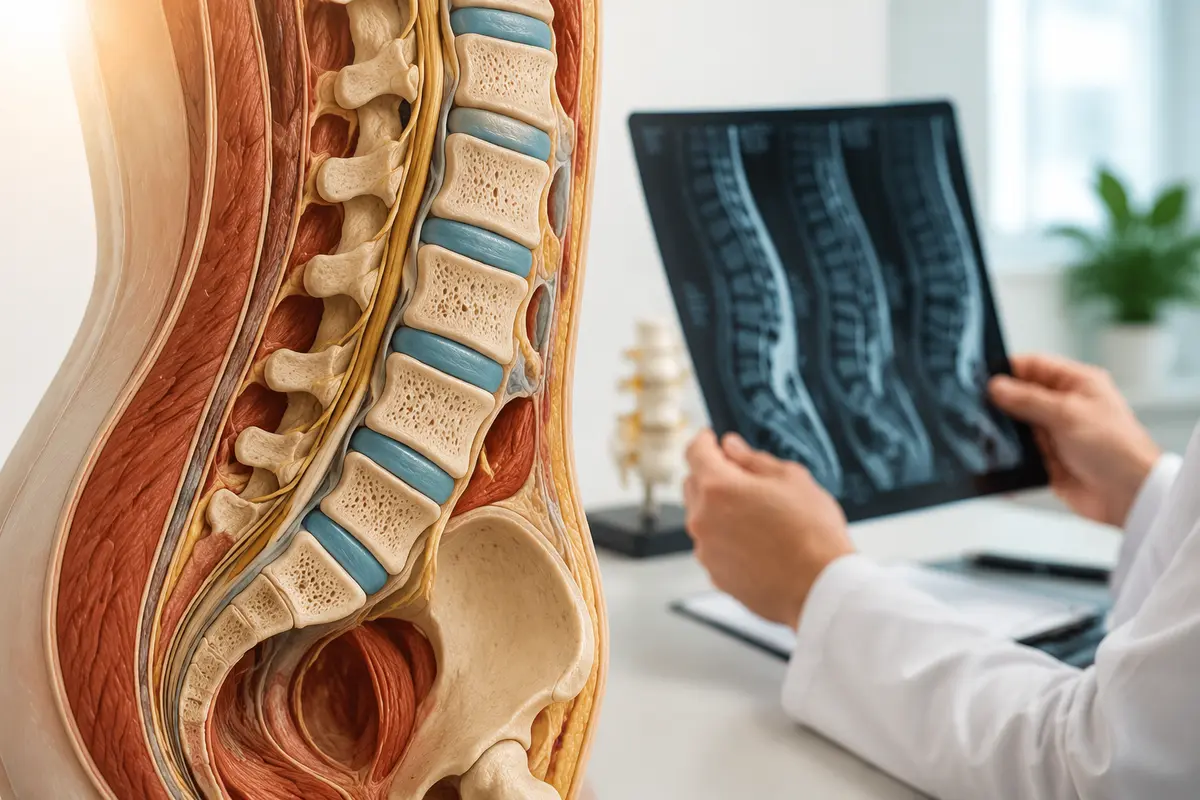
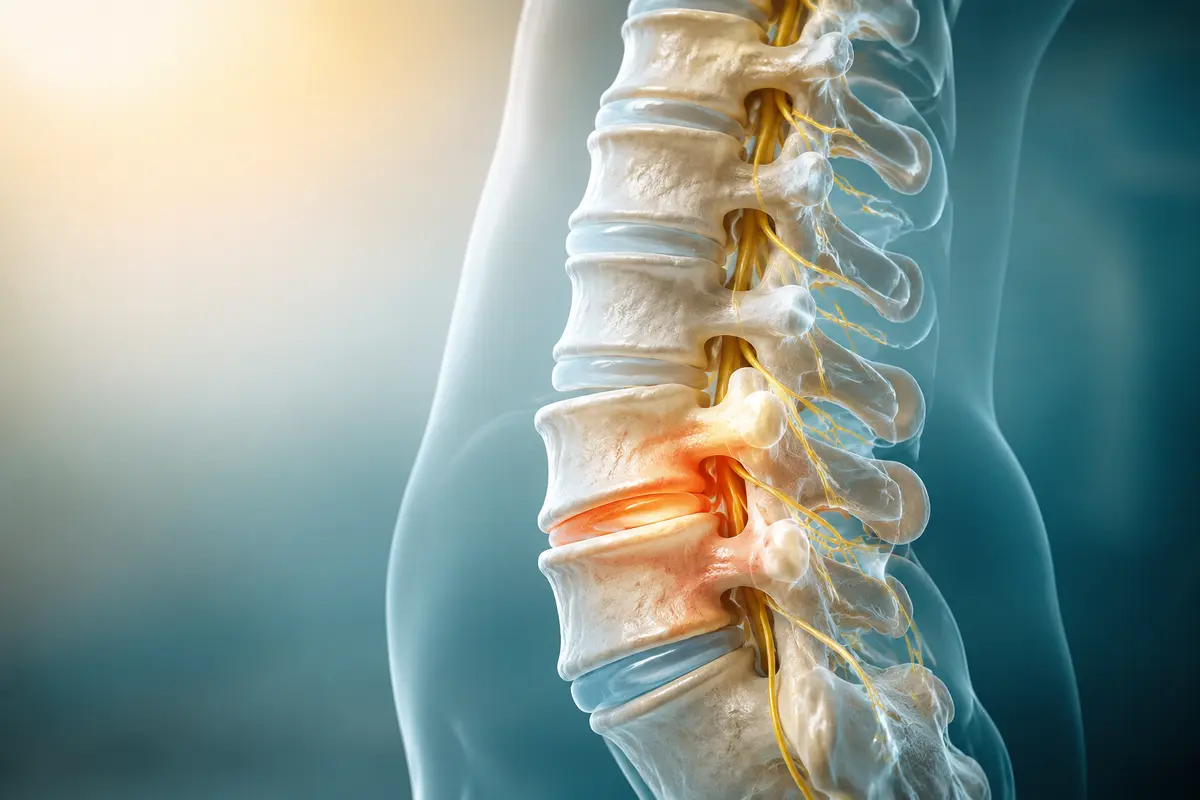
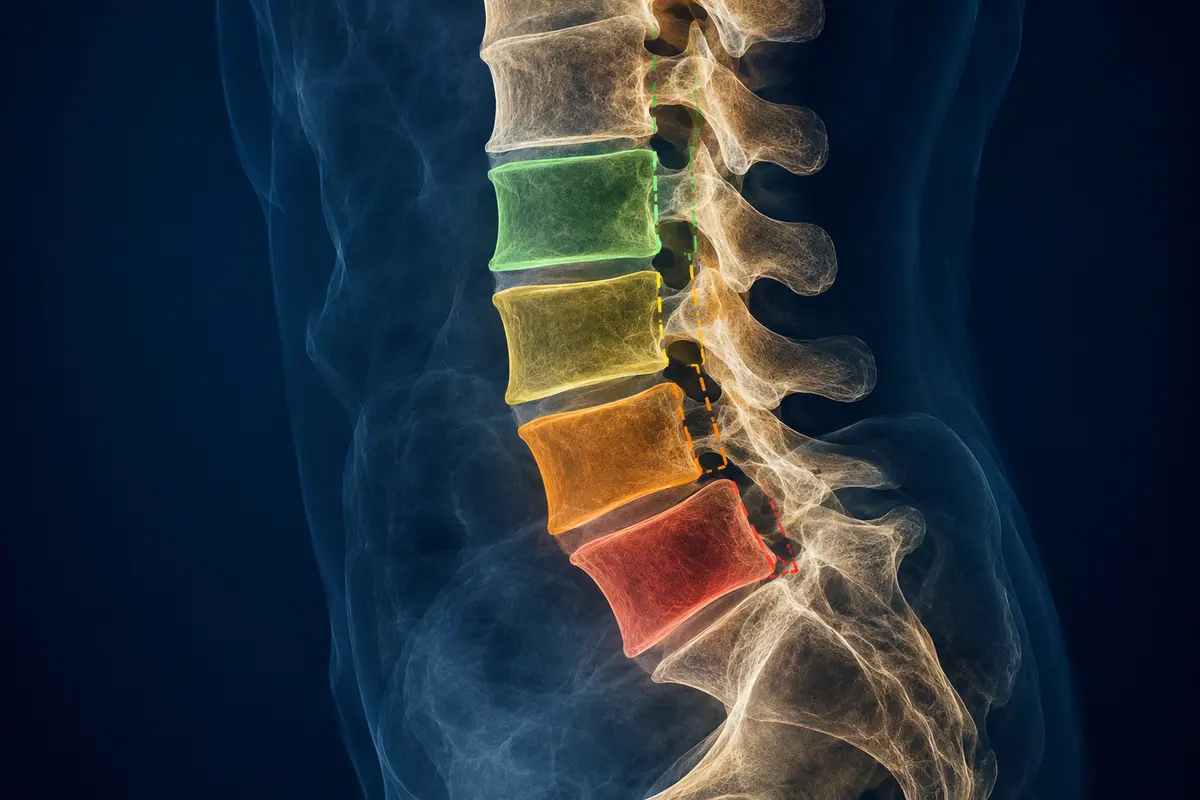
Spondylolisthesis is a condition where one vertebra slides forward relative to the vertebra beneath it. The word comes from the Greek "spondylos" (vertebra) and "olisthesis" (slipping). It most commonly affects the lower lumbar spine, especially the L4-L5 or L5-S1 levels.
There are several types, each with a different cause:
- Isthmic spondylolisthesis — the most common type in younger patients. A stress fracture (spondylolysis) in the pars interarticularis weakens the bony hook that normally locks the vertebra in place.
- Degenerative spondylolisthesis — the most common type in adults over 50. Age-related disc and facet joint degeneration allows the vertebra to shift forward gradually.
- Traumatic — caused by an acute fracture from injury.
- Pathological — caused by bone disease such as a tumour or infection.
- Dysplastic (congenital) — a developmental abnormality of the facet joints present from birth.
Understanding which type you have matters because it directly influences spondylolisthesis treatment decisions.
How Serious Is Spondylolisthesis and Can It Get Worse?
Most spondylolisthesis cases are low-grade and stable, meaning they are unlikely to progress significantly. However, certain factors increase the risk of worsening.
Grading the slip (Meyerding classification):
Grade I slips rarely progress in adults. In growing adolescents, progression is more likely, which is why monitoring with periodic imaging is recommended until skeletal maturity.
Factors that increase the risk of progression:
- Young age (still growing)
- High slip angle (how tilted the vertebra is, not just how far it has moved)
- Disc degeneration at the affected level
- High-grade slip at initial diagnosis
If you have been told your slip is "unstable," that typically means there is abnormal motion between the two vertebrae on flexion-extension X-rays. Instability is one of the strongest indicators that surgery may eventually be needed.
What Are the Best Spondylolisthesis Treatment Options?
The best treatment depends on your slip grade, symptoms, and whether the slip is stable. For most patients, the answer begins with conservative care.
Conservative (Non-Surgical) Spondylolisthesis Treatment
- Physiotherapy — Structured core stabilisation programmes strengthen the muscles that support the lumbar spine. Research published in peer-reviewed journals consistently shows that targeted exercise programmes reduce pain and improve function in patients with low-grade slips.
- Pain management — Non-steroidal anti-inflammatory drugs (NSAIDs), paracetamol, and short courses of muscle relaxants can help manage flare-ups.
- Epidural steroid injections — These may provide temporary relief when nerve root irritation causes leg pain (radiculopathy).
- Activity modification — Avoiding activities that place excessive extension or rotational stress on the lumbar spine.
- Bracing — Occasionally used in adolescents with acute pars fractures to promote healing, though evidence for bracing in adults is limited.
Surgical Spondylolisthesis Treatment
Surgery is typically considered when:
- Conservative treatment has failed after three to six months
- There is progressive neurological deficit (weakness, numbness, bladder or bowel dysfunction)
- The slip is high-grade (III or above) and symptomatic
- There is documented instability on dynamic imaging
The most common surgical procedure is spinal fusion, which locks the affected vertebrae together using screws, rods, and a bone graft. In some cases, a decompression (laminectomy) is performed at the same time to relieve pressure on the nerves. Decompression without fusion may be considered in select cases of degenerative spondylolisthesis where there is no significant instability, though this remains a topic of ongoing debate in the surgical literature.
A word of caution: Not every surgeon will agree on whether you need surgery. I have reviewed many cases where patients were recommended fusion for a stable Grade I slip with mild symptoms. In my experience, seeking an independent second opinion before committing to spinal surgery is one of the most valuable steps a patient can take.
Can Physical Therapy Help With Spondylolisthesis Without Surgery?
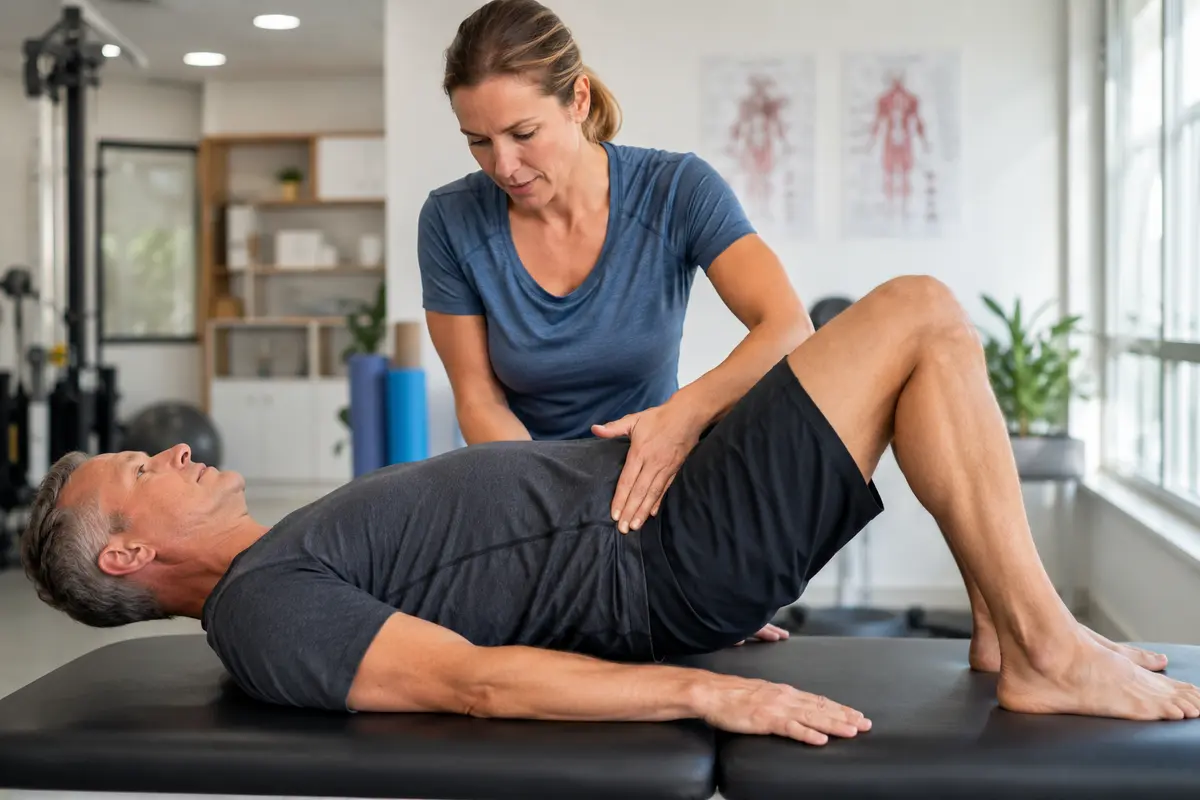
Yes. For Grade I and most Grade II slips, physiotherapy is the first-line treatment and is effective for the majority of patients. A well-designed programme focuses on:
- Core stabilisation — strengthening the deep abdominal muscles (transversus abdominis) and multifidus muscles that directly support the lumbar spine.
- Flexion-based exercises — gentle forward-bending movements that open the spinal canal and reduce nerve compression.
- Hip and hamstring flexibility — tight hamstrings are common in spondylolisthesis and can worsen pelvic tilt and pain.
- Postural retraining — learning to maintain a neutral spine during daily activities.
A typical course of physiotherapy lasts eight to twelve weeks, with home exercises continued long-term. Many patients experience meaningful improvement within the first six weeks.
Common mistake: Starting physiotherapy without a clear diagnosis or slip grade. Make sure your therapist has seen your imaging and understands the specific type and grade of your spondylolisthesis. A generic "back exercise programme" is not the same as a targeted stabilisation protocol.
What Exercises Should I Avoid if I Have Spondylolisthesis?
Avoid exercises that increase lumbar extension (arching the lower back) or place high compressive and shear forces on the spine. Specific examples include:
- Hyperextension exercises (back extensions on a Roman chair)
- Heavy overhead pressing (military press, heavy overhead squats)
- Gymnastics movements (back walkovers, bridges)
- High-impact activities such as repeated jumping or running on hard surfaces during a flare-up
- Heavy deadlifts and squats with poor form or excessive load
This does not mean you must avoid all exercise. In fact, staying active is one of the most important things you can do. The key is to choose exercises that strengthen without stressing the slip. Swimming, cycling, walking, and Pilates-based core work are generally well tolerated.
Is Spondylolisthesis Treatment Different for Athletes?
Athletes, especially young ones in sports involving repetitive lumbar extension (gymnastics, cricket fast bowling, football, diving), are at higher risk for isthmic spondylolisthesis. Treatment principles are the same, but the timeline and goals differ.
For young athletes with an acute pars stress fracture:
- Rest from the aggravating sport for six to twelve weeks
- Bracing may be considered to promote bone healing
- Gradual return to sport guided by symptoms and, in some cases, repeat imaging
For adult athletes with a known stable slip:
- Sport-specific rehabilitation focusing on core strength and movement patterns
- Modification of training load and technique rather than complete cessation
- Surgery is rarely needed unless there is instability or progressive symptoms
The decision to return to competitive sport after a spondylolisthesis diagnosis should be made jointly by the athlete, their surgeon, and their physiotherapist. Many professional athletes compete successfully with a known low-grade slip.
Can Teenagers Get Spondylolisthesis Treatment?
Spondylolisthesis is actually more common in teenagers than many people realise, particularly isthmic spondylolisthesis. It is estimated that pars defects are present in roughly 6% of the general population, with many developing during adolescence.
Treatment for teenagers typically involves:
- Activity restriction from aggravating sports
- A structured physiotherapy programme
- Periodic imaging (usually every six to twelve months) to monitor for progression during growth spurts
- Bracing in selected cases of acute pars fractures
Surgery in teenagers is reserved for high-grade slips (Grade III or above), slips that are clearly progressing, or cases with neurological symptoms that do not respond to conservative care. The good news is that most adolescents with low-grade slips do very well without surgery and can return to full activity.
How Do I Know if My Spondylolisthesis Is Getting Worse?
Signs that your spondylolisthesis may be progressing include:
- Increasing back pain that is not responding to treatment
- New or worsening leg pain, numbness, or weakness — this suggests increased nerve compression
- Changes in posture — a visible increase in lordosis (swayback) or a crouched gait in severe cases
- Bladder or bowel changes — this is a red flag (cauda equina syndrome) and requires urgent medical attention
- Worsening on follow-up imaging — comparison of standing lateral X-rays over time is the most reliable way to document progression
If you notice any of these changes, see your treating clinician promptly. Worsening neurological symptoms, in particular, should not be ignored.
What Are the Risks of Leaving Spondylolisthesis Untreated?
For a stable, low-grade slip with minimal symptoms, the risk of leaving it "untreated" (meaning no surgery) is generally low, provided you maintain an active lifestyle and good core strength.
For higher-grade or unstable slips, the risks of no treatment include:
- Progressive slippage leading to spinal deformity
- Chronic nerve compression causing permanent weakness or numbness
- Cauda equina syndrome (rare but serious) — loss of bladder and bowel control requiring emergency surgery
- Chronic pain that limits daily function and quality of life
The word "untreated" is important here. Choosing conservative management is not the same as doing nothing. Active conservative care, including exercise, lifestyle modification, and monitoring, is a legitimate and evidence-based treatment strategy for the right patient.
How Much Does Spondylolisthesis Surgery Cost?
Surgical costs vary enormously depending on the country, the type of procedure, and the healthcare system. A single-level lumbar fusion can range from approximately EUR 10,000 to EUR 25,000 in many European countries, and significantly more in some private healthcare systems worldwide. In countries without universal healthcare coverage, costs can be substantially higher.
Because of these financial implications, and because not every recommended surgery is necessary, getting a second opinion before proceeding is particularly important. An online second opinion from an independent spine surgeon can help you understand whether surgery is truly indicated in your case, potentially saving you from an unnecessary procedure and its associated costs and risks.
What Lifestyle Changes Help Manage Spondylolisthesis Pain?
Several practical changes can make a meaningful difference:
- Maintain a healthy weight — excess body weight increases the load on the lumbar spine
- Stay active — regular low-impact exercise (walking, swimming, cycling) keeps the supporting muscles strong
- Improve your workstation ergonomics — a supportive chair and proper desk height reduce sustained spinal stress
- Stop smoking — smoking impairs blood flow to spinal structures and accelerates disc degeneration
- Manage stress — chronic stress can amplify pain perception; mindfulness and relaxation techniques may help
- Sleep position — sleeping on your side with a pillow between your knees, or on your back with a pillow under your knees, reduces lumbar extension
How Long Does Recovery Take After Spondylolisthesis Surgery?
Recovery after lumbar fusion for spondylolisthesis typically follows this general timeline:
- First 2 weeks — wound healing, limited walking, pain management
- 2 to 6 weeks — gradual increase in walking distance, light daily activities
- 6 to 12 weeks — begin guided physiotherapy, return to desk work for many patients
- 3 to 6 months — return to most daily activities and light exercise
- 6 to 12 months — bone graft maturation and full fusion; return to more demanding activities
These timelines are general estimates. Individual recovery varies based on age, fitness level, the extent of surgery, and whether complications occur. I always tell my patients that the goal is steady progress, not speed.
Common mistake: Returning to heavy physical activity too early. The hardware (screws and rods) holds the vertebrae in place while the bone graft fuses, but the graft needs time to mature. Overloading the spine before fusion is solid can lead to hardware failure or non-union (pseudarthrosis).
Why Consider a Second Opinion Before Spine Surgery?
Spinal surgery is a significant decision. Studies have consistently shown that second opinions in spine surgery can change the recommended treatment plan in a meaningful proportion of cases. In my practice offering online second opinions to patients worldwide, I regularly see cases where:
- Surgery was recommended for a stable, low-grade slip that would likely respond to conservative care
- The proposed surgical approach could be simplified or modified
- Additional imaging or testing was needed before making a decision
- Surgery was indeed appropriate, and the second opinion provided the patient with confidence to proceed
An online second opinion does not replace an in-person examination, and I always recommend that patients see a local specialist for a physical assessment. But reviewing your imaging, reports, and clinical history remotely can provide valuable clarity, especially when you are facing a major surgical decision and want an independent perspective.
Frequently Asked Questions
Can spondylolisthesis heal on its own?
A low-grade slip itself does not "heal" in the sense that the vertebra returns to its original position. However, the symptoms often resolve with conservative treatment, and many people live full, active lives with a stable slip that causes no problems.
Is spondylolisthesis a disability?
Most people with spondylolisthesis, particularly low-grade, are not significantly disabled. High-grade slips with neurological involvement can cause functional limitations, but even these often improve with appropriate treatment.
Can I run with spondylolisthesis?
Many people with a stable, low-grade slip can run without problems. It depends on your symptoms, your core strength, and how your body responds. Start gradually and listen to your body. If running consistently worsens your pain, consider lower-impact alternatives.
How often should I get imaging to monitor my slip?
For stable, low-grade slips in adults, routine repeat imaging is usually unnecessary unless symptoms change. For adolescents or higher-grade slips, your surgeon may recommend standing X-rays every six to twelve months.
Is minimally invasive surgery an option for spondylolisthesis?
Yes. Minimally invasive fusion techniques (such as MIS-TLIF) are increasingly used for spondylolisthesis. They may offer shorter hospital stays and faster initial recovery, though long-term outcomes appear similar to open techniques. Not every case is suitable for a minimally invasive approach.
Should I get a second opinion if surgery has been recommended?
I strongly encourage it. Spine surgery is not easily reversed, and an independent review of your case can either confirm the recommendation or suggest alternatives you may not have considered. An online second opinion is a practical option for patients who do not have easy access to another specialist locally.
Conclusion
Spondylolisthesis is a common spinal condition that ranges from an incidental finding on imaging to a source of significant pain and disability. The good news is that most cases, particularly low-grade slips, respond well to conservative treatment centred on physiotherapy and lifestyle modification. Surgery is an effective option when it is truly needed, but it should be reserved for cases with clear indications: instability, progressive neurological deficit, or failure of adequate conservative care.
If you have been told you need surgery for spondylolisthesis, take the time to understand your slip grade, ask whether conservative treatment has been fully explored, and consider seeking an independent second opinion. As a spine surgeon who reviews cases from around the world, I can tell you that this single step often provides patients with the clarity and confidence they need to make the right decision for their individual situation.
Your spine is worth a careful, well-informed approach. Do not rush into a decision, and do not be afraid to ask questions.