
Quick Answer: Most people with spinal stenosis can manage their symptoms effectively without surgery, at least for a period of years, using a combination of targeted physiotherapy, medication, lifestyle changes, and sometimes injections. Surgery becomes a reasonable option when conservative measures fail to control leg pain or when neurological deficits (such as progressive weakness or bladder problems) develop. An independent second opinion, which can now be obtained online, helps you confirm whether you've truly exhausted non-surgical options before committing to an operation.
Key Takeaways
- Spinal stenosis is overwhelmingly a condition of ageing; most patients are over 60, and the narrowing itself doesn't always cause symptoms.
- Structured physiotherapy focused on flexion-based exercises and core stability is the single most evidence-supported non-surgical treatment.
- Epidural steroid injections can offer temporary relief (weeks to months) but are not a long-term solution and carry diminishing returns with repeated use.
- Simple medications like paracetamol, NSAIDs, and neuropathic pain agents (gabapentin, pregabalin) form a practical first-line approach.
- Weight loss, even a modest 5–10%, can meaningfully reduce spinal load and improve walking tolerance.
- Red-flag signs that warrant urgent surgical evaluation include progressive leg weakness, loss of bladder or bowel control, and rapidly worsening walking distance despite treatment.
- Many patients manage stenosis conservatively for years; the condition doesn't always get worse.
- A second opinion from an independent spine specialist can prevent unnecessary surgery or, equally, confirm that surgery is the right next step.
Roughly one in five adults over 60 has some degree of lumbar spinal stenosis visible on MRI, yet only a fraction of them will ever need an operation. I see this mismatch every week in my practice in Stolberg, Germany, and through the online second opinions I provide to patients worldwide. Someone receives an MRI report that says "severe stenosis," a surgeon recommends decompression, and the patient is left wondering: Is there a way to treat this without surgery? In most cases, the honest answer is yes, at least initially. This article explains what actually works, what doesn't, and when it's reasonable to consider surgery after all.
What exactly is spinal stenosis and how does it happen?
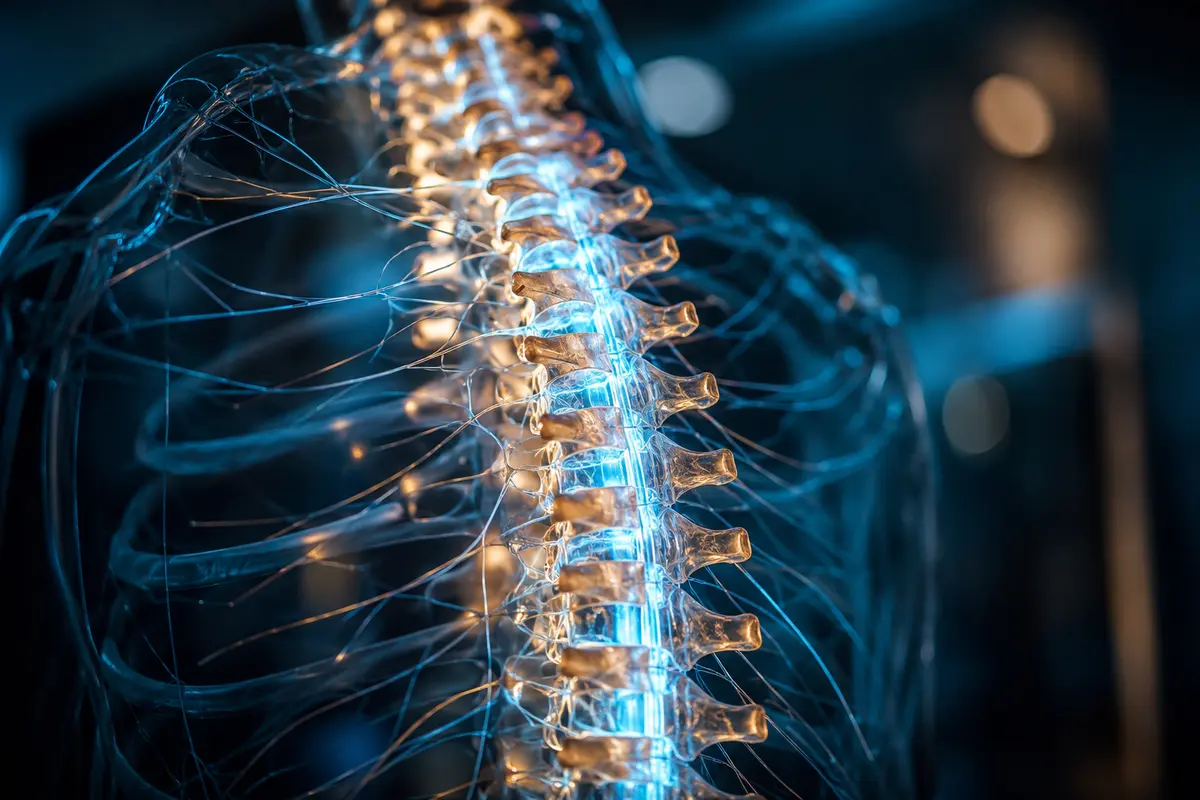
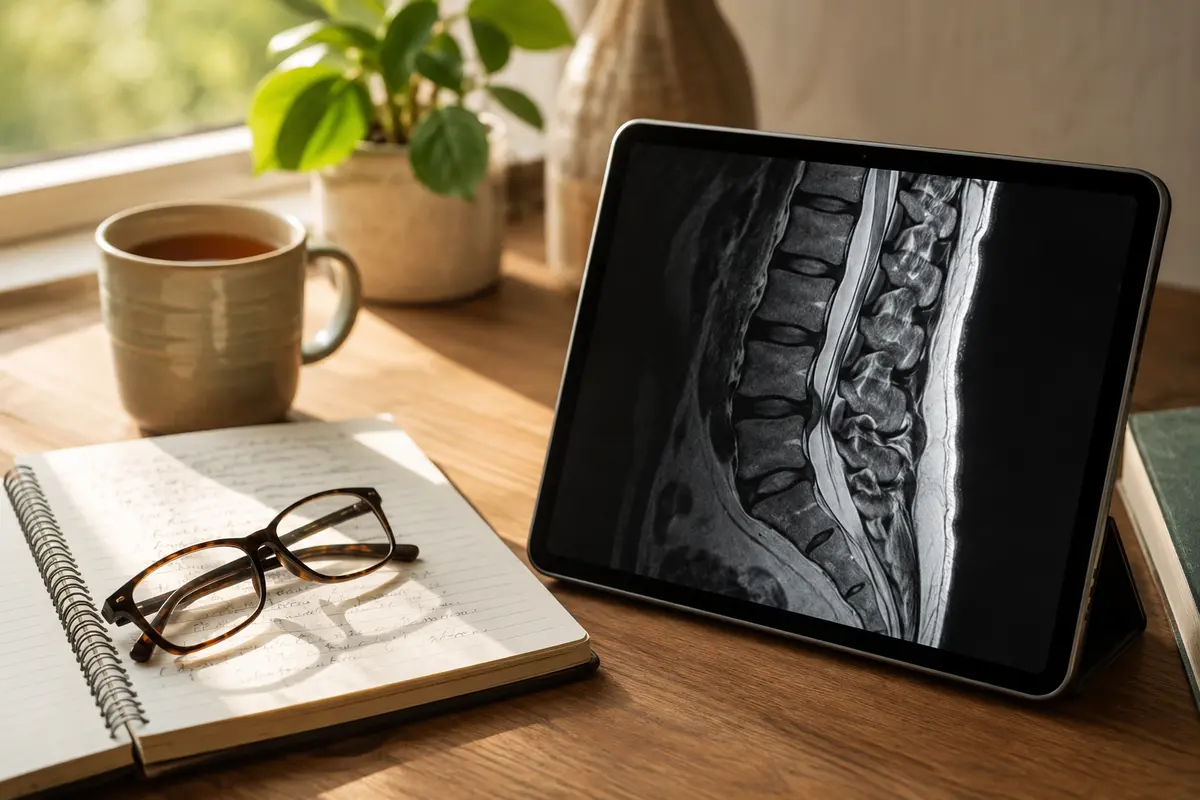
Spinal stenosis is a narrowing of the spinal canal or the nerve exit tunnels (foramina) that puts pressure on the spinal cord or nerve roots. In the lumbar spine, this typically causes leg pain, numbness, or weakness that worsens with walking and standing, a pattern called neurogenic claudication.
The most common cause is age-related wear and tear. Over decades, the intervertebral discs lose height, the facet joints enlarge with arthritis, and the ligamentum flavum thickens. Together, these changes gradually reduce the space available for the nerves. Less commonly, stenosis can result from a congenital narrow canal, spondylolisthesis (vertebral slippage), or previous spinal injury.
Key point: Having stenosis on an MRI does not automatically mean you need treatment. Many people have significant narrowing on imaging but walk around with minimal or no symptoms. Treatment decisions should be based on your symptoms and functional limitations, not the MRI alone.
Who is most likely to develop spinal stenosis?
Adults over 50 are the primary group affected, with prevalence rising steeply after age 60. Risk factors include a family history of spinal problems, obesity, previous spinal injury, occupations involving heavy manual labour, and smoking (which accelerates disc degeneration).
Women may be slightly more commonly affected than men in some population studies, though both sexes develop the condition frequently. If you have a naturally narrow spinal canal (congenital stenosis), even modest age-related changes can produce symptoms earlier in life.
Can physical therapy really help with spinal stenosis pain?
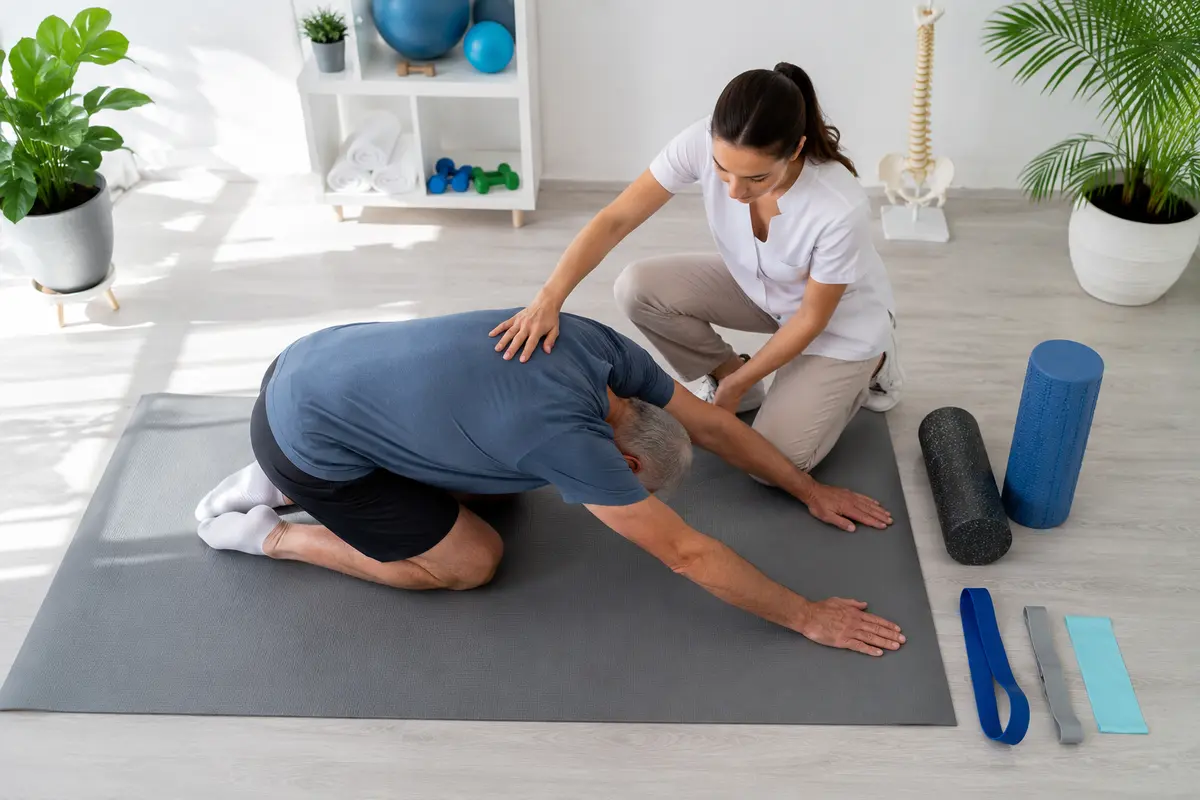
Yes. Physiotherapy is the most consistently supported non-surgical treatment for lumbar spinal stenosis. Multiple clinical studies, including the landmark SPORT trial and Cochrane reviews of exercise therapy for back pain, show that structured exercise programmes improve pain, walking distance, and quality of life in stenosis patients.
What makes physiotherapy effective for stenosis:
- Flexion-based exercises open the spinal canal slightly. Leaning forward, cycling, or doing knee-to-chest stretches increases the space around compressed nerves. This is why many stenosis patients feel better pushing a shopping trolley (which puts the spine in flexion) and worse standing upright.
- Core stabilisation strengthens the muscles that support the lumbar spine, reducing abnormal movement at degenerated segments.
- Aerobic conditioning (stationary cycling, aquatic therapy, walking programmes) improves blood flow to the nerves and builds endurance.
Common mistake: Doing extension-heavy exercises (like cobra pose or standing backbends) that are helpful for disc herniations but can worsen stenosis symptoms by further narrowing the canal.
A reasonable physiotherapy trial lasts at least 6 to 12 weeks, with sessions two to three times per week. If you haven't tried a properly supervised programme for this duration, it's premature to conclude that conservative treatment has failed.
What exercises can I do at home to manage spinal stenosis symptoms?
Home exercises complement formal physiotherapy and help maintain gains between sessions. The following are generally well tolerated by stenosis patients, but check with your treating clinician before starting:
- Knee-to-chest stretch — Lie on your back, pull one knee toward your chest, hold 20–30 seconds, alternate sides. Repeat 5 times each.
- Pelvic tilts — Lie on your back with knees bent, gently flatten your lower back against the floor by tightening your abdominal muscles. Hold 5 seconds, repeat 10 times.
- Stationary cycling — The seated, slightly flexed position is ideal for stenosis. Start with 10–15 minutes and build up gradually.
- Aquatic walking or swimming — Water supports body weight and allows movement with less spinal load.
- Seated lumbar flexion — Sit in a chair, slowly bend forward reaching toward the floor, hold 15–20 seconds, return upright. Repeat 5 times.
- Bridging — Lie on your back with knees bent, lift your hips off the floor, hold 5 seconds, lower slowly. Builds gluteal and core strength.
Choose cycling or aquatic exercise if you find walking painful after a short distance. These activities keep you in a flexed posture that relieves nerve pressure.
Stop and seek advice if any exercise causes increasing leg weakness, numbness spreading to the groin, or loss of bladder control.
What medications help with spinal stenosis pain management?
Medication for spinal stenosis aims to reduce pain and inflammation enough that you can participate in physiotherapy and daily activities. No drug reverses the structural narrowing, but several can meaningfully improve comfort.
| Medication class | Examples | Best for | Notes |
|---|---|---|---|
| Simple analgesics | Paracetamol (acetaminophen) | Mild pain | Limited evidence for stenosis specifically; low side-effect profile |
| NSAIDs | Ibuprofen, naproxen, diclofenac | Inflammatory flare-ups, moderate pain | Use lowest effective dose; monitor kidney function and stomach in older adults |
| Neuropathic agents | Gabapentin, pregabalin | Nerve-type leg pain, burning, tingling | Start low, increase gradually; drowsiness is common initially |
| Muscle relaxants | Tizanidine, baclofen | Associated muscle spasm | Short-term use preferred; can cause sedation |
| Opioids | Tramadol, codeine | Severe pain unresponsive to above | Short courses only; significant risks of dependence and falls in older adults |
Decision rule: If your main complaint is leg pain with burning or tingling, a neuropathic agent (gabapentin or pregabalin) is often more effective than a standard painkiller. If your main complaint is back stiffness and aching, an NSAID trial makes more sense. Many patients benefit from a combination.
NICE guidelines recommend against long-term opioid use for chronic non-cancer pain, including spinal stenosis. I strongly echo this: the risks of opioid dependence, cognitive impairment, and falls in older patients outweigh the modest benefits.
Are steroid injections effective for spinal stenosis relief?
Epidural steroid injections can provide short- to medium-term pain relief for spinal stenosis, but they are not a cure and their benefit tends to diminish with repeated use.
How they work: A corticosteroid (often combined with a local anaesthetic) is injected into the epidural space near the compressed nerves. This reduces local inflammation and swelling, temporarily creating more room for the nerves.
What the evidence shows:
- Many patients experience meaningful relief lasting 3 weeks to 3 months.
- A Cochrane review of injection therapies for spinal stenosis found moderate-quality evidence for short-term improvement in leg pain, but limited evidence for long-term benefit.
- Repeated injections (more than 3–4 per year) carry increasing risks, including elevated blood sugar in diabetic patients, potential bone density loss, and rare but serious complications like infection or nerve injury.
Choose injections if you need a window of pain relief to engage in physiotherapy, or if you're managing a flare-up and want to avoid or delay surgery. Don't rely on injections as your sole long-term strategy.
Can weight loss and lifestyle changes improve my spinal stenosis?
Absolutely. Excess body weight increases the compressive load on the lumbar spine, accelerates disc and joint degeneration, and worsens symptoms. Even a modest weight reduction of 5–10% of body weight can reduce spinal load enough to improve walking tolerance and pain levels.
Practical lifestyle changes that help:
- Dietary modification — Focus on sustainable calorie reduction rather than extreme diets. A Mediterranean-style diet also has anti-inflammatory properties.
- Smoking cessation — Smoking impairs blood flow to spinal structures and accelerates disc degeneration. Quitting won't reverse existing damage, but it slows further deterioration.
- Activity modification — Avoid prolonged standing and walking downhill (which increases lumbar extension). Use a walking stick or rollator if it extends your comfortable walking distance; there is no shame in this.
- Sleeping position — Side-lying with a pillow between the knees, or on your back with a pillow under the knees, keeps the lumbar spine in mild flexion.
How do chiropractors treat spinal stenosis without surgery?
Chiropractic care for spinal stenosis typically involves manual therapy techniques such as flexion-distraction (a gentle, rhythmic stretching of the lumbar spine), soft tissue mobilisation, and exercise prescription. Some patients report symptom improvement, particularly with flexion-distraction methods.
Important caveats:
- High-velocity spinal manipulation (the classic "cracking" adjustment) is generally not recommended for significant stenosis, especially if there is spondylolisthesis or severe nerve compression.
- The evidence base for chiropractic treatment of stenosis is limited compared to physiotherapy. Most studies are small and of low to moderate quality.
- If you choose chiropractic care, ensure the practitioner is aware of your diagnosis and imaging findings, and that they avoid forceful extension-based techniques.
My view as a spine surgeon: I don't discourage patients from seeing a chiropractor if they find it helpful, but I do encourage them to combine it with a structured exercise programme and to be cautious about aggressive manipulation.
Are there alternative treatments like acupuncture that might help?
Some patients with spinal stenosis report benefit from acupuncture, and there is limited evidence suggesting it may help with chronic low back pain in general. However, high-quality studies specifically for spinal stenosis are scarce.
Other complementary approaches patients ask about:
- Acupuncture — May help with pain perception; low risk of harm when performed by a trained practitioner. Consider it as an adjunct, not a replacement for physiotherapy.
- TENS (transcutaneous electrical nerve stimulation) — A portable device that delivers mild electrical impulses through the skin. Some patients find it helpful for short-term pain relief. Inexpensive and safe.
- Massage therapy — Can relieve muscle tension and improve comfort but does not address the underlying nerve compression.
- Mindfulness and cognitive behavioural therapy (CBT) — Chronic pain has a significant psychological component. CBT-based pain management programmes have good evidence for improving function and reducing distress in chronic spinal conditions.
Bottom line: These approaches work best as part of a broader management plan, not as standalone treatments.
How much do non-surgical treatments for spinal stenosis cost?
Costs vary widely depending on your country, healthcare system, and whether you have insurance coverage. As a general guide:
| Treatment | Approximate cost range (self-pay) | Frequency |
|---|---|---|
| Physiotherapy session | €40–€120 per session | 2–3× per week for 6–12 weeks |
| Epidural steroid injection | €200–€800 per injection | Up to 3–4 per year |
| Medications (monthly) | €10–€60 | Ongoing |
| Acupuncture session | €30–€100 per session | Weekly for 6–10 weeks |
| Online second opinion | €150–€400 (varies by provider) | Once, or as needed |
These figures are rough estimates and will differ by region. In many European countries, physiotherapy and injections are partially or fully covered by statutory health insurance. The key point is that a comprehensive conservative programme is almost always less expensive (and less risky) than spinal surgery, which typically costs €5,000–€15,000 or more depending on the procedure and country.
How long can I manage spinal stenosis without surgical intervention?
Many patients manage spinal stenosis conservatively for years, and some never require surgery. The natural history of lumbar stenosis is more favourable than many people assume: studies following patients over several years show that roughly a third improve, a third stay stable, and a third worsen.
Factors that favour long-term conservative management:
- Symptoms are primarily pain-based (not progressive weakness)
- Walking distance is still functional for daily needs
- Symptoms respond to physiotherapy, medication, or injections
- The patient is motivated to maintain an exercise routine
Factors that may shorten the conservative window:
- Progressive neurological deficit (increasing leg weakness, foot drop)
- Cauda equina symptoms (bladder or bowel dysfunction, saddle-area numbness) — this is a surgical emergency
- Severe, unrelenting pain that doesn't respond to any conservative measure over 3–6 months
- Significant reduction in quality of life despite a full trial of non-surgical treatment
When should I worry that my non-surgical treatments aren't working?
If you've completed a genuine 3- to 6-month course of structured conservative treatment (not just resting at home) and your symptoms are worsening or your walking distance is declining, it's time to reassess.
Red flags that warrant urgent evaluation:
- New or worsening weakness in the legs or feet
- Difficulty lifting the foot (foot drop)
- Loss of bladder or bowel control
- Numbness in the saddle area (inner thighs, buttocks, perineum)
- Rapidly progressive symptoms over days to weeks
Yellow flags (time to reconsider your plan, but not emergencies):
- Walking distance has dropped below what you need for daily life
- Pain is no longer controlled by your current medication regimen
- You're avoiding activities you value because of symptoms
- Sleep is consistently disrupted by pain
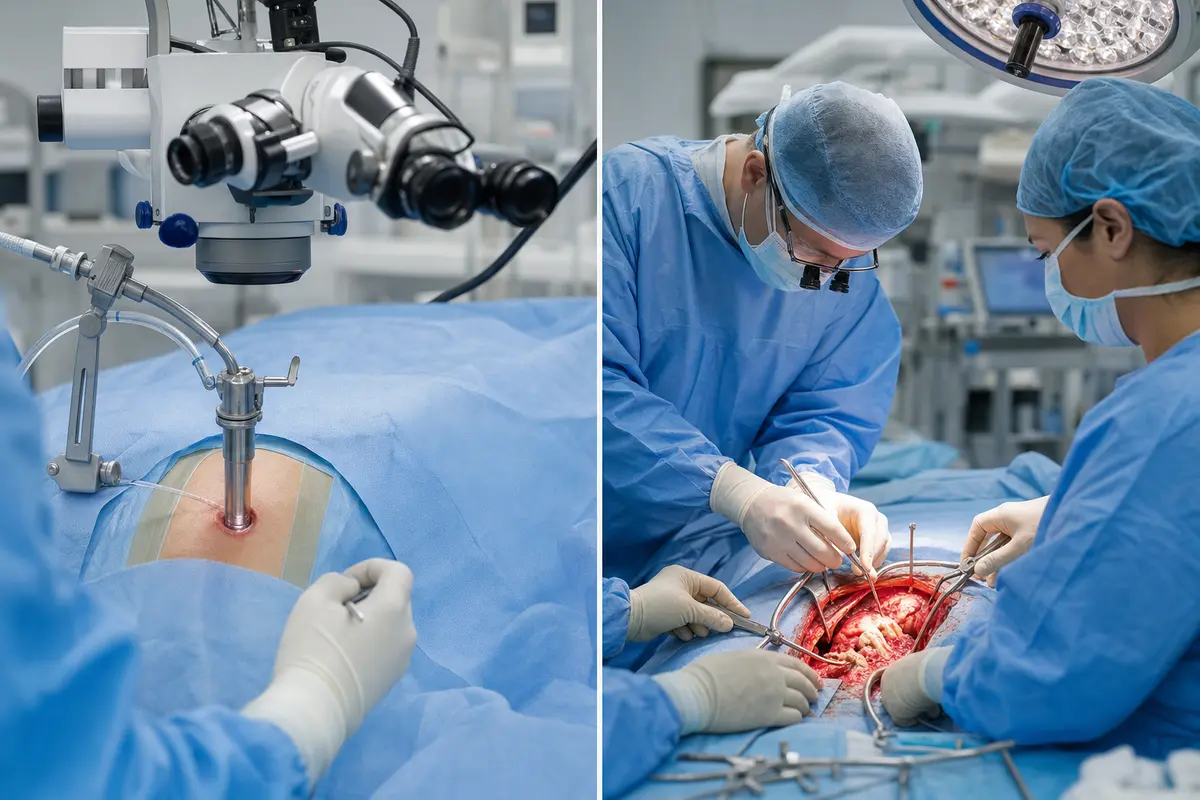
At this point, surgical decompression (most commonly a laminectomy or laminotomy) becomes a reasonable option. The goal of surgery is to create more space for the nerves, and outcomes for well-selected patients are generally good. But "well-selected" is the critical phrase — and that's where a second opinion adds real value.
What are the risks of leaving spinal stenosis untreated?
For most patients, spinal stenosis is not dangerous in the short term. It is a slowly progressive condition, and the main risk of doing nothing is gradual worsening of symptoms: shorter walking distance, more leg pain, and reduced quality of life.
However, in a small subset of patients, untreated severe stenosis can lead to:
- Permanent nerve damage if compression is prolonged and severe
- Cauda equina syndrome (rare but serious) — loss of bladder/bowel function requiring emergency surgery
- Progressive weakness that may not fully recover even after surgery if left too long
- Deconditioning and falls due to reduced mobility, which is a significant concern in older adults
The practical takeaway: you don't need to rush into surgery, but you shouldn't ignore worsening neurological symptoms either. Regular monitoring, whether with your GP, physiotherapist, or spine specialist, is important.
Why an independent second opinion matters before spine surgery
"In my experience, roughly 30–40% of the patients who come to me for a second opinion on spinal stenosis surgery either don't need the operation at all, or would benefit from trying conservative treatment more thoroughly first."
This isn't because the first surgeon was wrong — it's because spine surgery decisions involve significant judgment calls. Two experienced surgeons can look at the same MRI and clinical picture and reasonably disagree on timing or approach.
What a second opinion can clarify:
- Whether your imaging findings actually match your symptoms (they don't always)
- Whether you've had an adequate trial of conservative treatment
- Whether the proposed surgical approach is appropriate for your specific anatomy
- Whether there are less invasive options you haven't been offered
An online second opinion is particularly useful for international patients or those in areas with limited access to subspecialised spine surgeons. I offer this service from Stolberg, Germany, and it involves reviewing your imaging, clinical history, and current treatment plan. It doesn't replace an in-person examination, but it provides an informed, independent perspective that can help you make a more confident decision.
Frequently asked questions
Can spinal stenosis heal on its own?
The structural narrowing doesn't reverse, but symptoms can improve or stabilise with conservative treatment and lifestyle changes. The body can adapt, and inflammation around compressed nerves can settle with time and appropriate management.
Is walking good for spinal stenosis?
Walking is beneficial but may need to be modified. Short, frequent walks are better than one long walk. Using a rollator or walking stick allows a slightly flexed posture that opens the spinal canal. Stationary cycling is an excellent alternative when walking is too painful.
How do I know if I need surgery for spinal stenosis?
Surgery is most clearly indicated when you have progressive neurological deficits (weakness, bladder problems) or when a thorough 3- to 6-month conservative programme has failed to provide acceptable symptom control. An independent second opinion can help confirm the decision.
What is the success rate of non-surgical treatment for spinal stenosis?
Published studies suggest that approximately one-third to one-half of patients with moderate stenosis achieve satisfactory symptom control with conservative measures alone. Results depend heavily on the severity of stenosis, the quality of the conservative programme, and individual patient factors.
Can I get a second opinion online without travelling?
Yes. Many spine specialists, including myself, offer structured online second opinions where we review your MRI, clinical notes, and symptom history remotely. This is especially useful for patients who live far from a specialist centre or who want an independent perspective before making a surgical decision.
Is spinal stenosis a disability?
Spinal stenosis can be disabling if it severely limits your walking and daily activities, but many patients maintain good function with appropriate management. Whether it qualifies as a formal disability depends on your country's criteria and the severity of your functional limitations.
Conclusion
Spinal stenosis treatment without surgery is not only possible — for many patients, it's the right first approach. A combination of structured physiotherapy, appropriate medication, lifestyle modifications, and sometimes targeted injections can provide meaningful relief and maintain your quality of life for years. The key is committing to a genuine, supervised conservative programme for at least 3 to 6 months before concluding it hasn't worked.
Surgery (typically decompression) is a reasonable and effective option when conservative treatment truly fails or when neurological warning signs develop. But it should be a well-considered decision, not a rushed one.
Your next steps:
- If you haven't already, start a supervised physiotherapy programme focused on flexion-based exercises and core stability.
- Discuss medication options with your treating doctor, particularly neuropathic agents if you have leg pain with burning or tingling.
- Address modifiable risk factors: weight, smoking, activity levels.
- If surgery has been recommended, consider seeking an independent second opinion — online or in person — before proceeding.
- Monitor for red-flag symptoms (progressive weakness, bladder changes) and seek urgent evaluation if they occur.
If you'd like an independent review of your case, I offer online spine second opinions for patients worldwide. You can reach me through my practice in Stolberg, Germany. This is an educational article, not personal medical advice — always consult your treating clinician for decisions about your own care.
Meta title: Spinal Stenosis Treatment Without Surgery: What Works
Meta description: Board-certified spine surgeon explains evidence-based spinal stenosis treatment without surgery, including physiotherapy, injections, and when to consider a second opinion.
Tags: spinal stenosis treatment without surgery, lumbar stenosis, conservative spine treatment, physiotherapy for stenosis, epidural steroid injections, spine second opinion, neurogenic claudication, spinal decompression, back pain management, non-surgical spine care, older adults spine health, online second opinion