
Last updated: June 26, 2026
About one in three people who undergo lumbar spine surgery still report meaningful pain a year later. That sobering reality, often called failed back surgery syndrome (or post-laminectomy syndrome), is the single most common reason patients ask me about a spinal cord stimulator for chronic pain. As a board-certified spine surgeon in Stolberg, Germany, I review imaging and surgical plans from patients around the world, and I want to give you the same honest, non-promissory picture I give them.
Quick Answer
A spinal cord stimulator (SCS) is an implanted device that delivers low-voltage electrical pulses to the spinal cord to reduce chronic neuropathic pain, especially leg pain after failed back surgery. It does not cure the underlying problem, but for carefully selected patients it can meaningfully reduce pain. A trial period before permanent implant is standard — and a second opinion before either surgery or stimulation is reasonable.
Key Takeaways
- A spinal cord stimulator for chronic pain is most evidence-supported for neuropathic leg pain, failed back surgery syndrome (FBSS), and complex regional pain syndrome (CRPS).
- Every reputable programme includes a trial period of roughly 3 to 10 days before permanent implantation.
- Honest outcomes: roughly half of well-selected patients report 50% or greater pain reduction at one year; many do better, some do not respond.
- It is not a fix for mechanical instability, severe nerve compression, or untreated psychological distress.
- MRI compatibility depends on the device — most modern systems are MRI-conditional, not unrestricted.
- Common alternatives include medical management, physiotherapy, targeted injections, and, in select cases, revision surgery.
- Get an independent second opinion before any implant or revision spine surgery. Imaging and operative reports can be reviewed online.
What is a spinal cord stimulator and how does it work?
A spinal cord stimulator is a small implanted device, similar in concept to a cardiac pacemaker, that sends mild electrical pulses to the dorsal columns of the spinal cord through thin leads placed in the epidural space. Those pulses interrupt or modulate pain signals before they reach the brain.
The system has three parts:
- Leads: thin wires placed in the epidural space, usually in the thoracic spine for leg pain.
- Pulse generator (IPG): a battery-powered device implanted under the skin, typically in the buttock or flank.
- Remote/programmer: a handheld controller that lets you adjust settings within preset limits.
Modern systems use different waveforms — traditional tonic (producing a tingling "paraesthesia"), high-frequency 10 kHz, burst, and closed-loop stimulation that responds to spinal cord activity in real time. Each has trade-offs, and no single waveform is best for everyone.
Who is a good candidate for a spinal cord stimulator?
A good candidate has predominantly neuropathic pain (burning, shooting, electric) in a limb, has tried and failed reasonable conservative care, and has no untreated red flags. SCS works best for nerve pain — not mechanical back pain from instability.
Typical indications supported by guidelines from NICE and the international neuromodulation literature:
- Failed back surgery syndrome with persistent radicular leg pain
- Complex regional pain syndrome (CRPS) types I and II
- Painful diabetic neuropathy in the legs
- Some cases of refractory angina or peripheral ischaemic pain (less common)
Choose SCS only if: pain is predominantly neuropathic, you have realistic expectations, you can manage a rechargeable device, and a structured psychological screening shows no major untreated depression, catastrophising, or active substance misuse that would undermine the trial.
Common mistake: assuming SCS will fix axial low back pain from disc degeneration. The evidence for pure mechanical back pain is much weaker than for leg-dominant nerve pain.
How does the spinal cord stimulator trial period work?
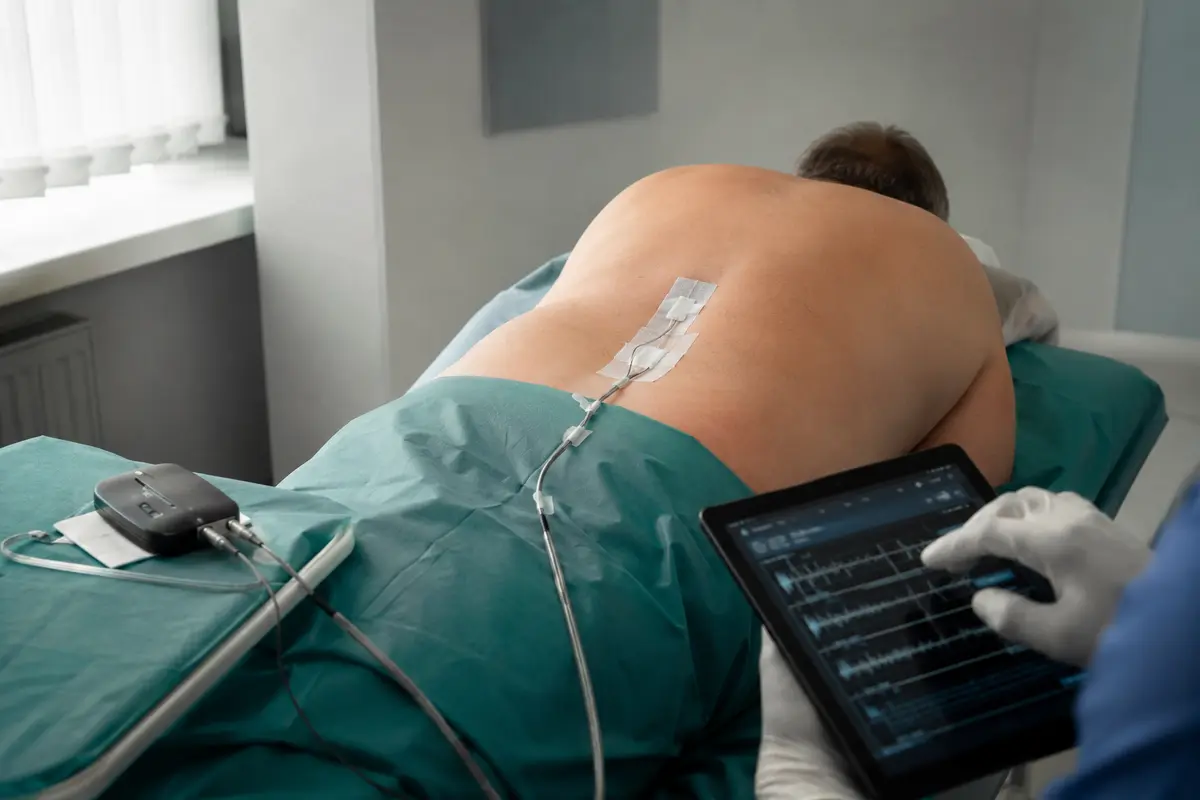
The trial is a test drive. Under local anaesthesia and X-ray guidance, a pain specialist threads temporary leads into your epidural space, with the wires exiting through the skin and connected to an external generator you wear on a belt. You then go home for 3 to 10 days and live normally while a representative helps programme the device.
A trial is considered successful if you achieve roughly 50% or greater pain reduction, better function, or reduced opioid use. If the trial succeeds, you proceed to permanent implantation. If it does not, the leads are removed in clinic — no bridges burned.
Why this matters: unlike most spine surgery, SCS gives you direct evidence of likely benefit before any permanent device is placed. I consider this one of the most patient-friendly aspects of the entire field. If a clinician offers permanent implantation without a trial, ask why.
Spinal cord stimulator surgery recovery time
Permanent implant recovery is usually quicker than open spine surgery. Most patients are discharged the same day or after one night. Light activity resumes within a few days; bending, twisting, lifting, and reaching overhead are typically restricted for 6 to 8 weeks to let the leads scar into position and reduce migration risk.
A realistic timeline:
Spinal cord stimulator side effects and risks
SCS is reversible and relatively low-risk compared with open spine surgery, but it is not risk-free. Honest disclosure matters.
Reported risks in the peer-reviewed literature include:
- Lead migration or fracture (the most common hardware issue, several percent of cases)
- Infection at the IPG pocket or along leads (roughly 2–5%)
- Loss of effectiveness over time (tolerance, scar tissue around leads)
- Dural puncture and headache
- Rare neurological injury, including, very rarely, spinal cord injury
- Need for revision surgery to replace leads, reposition, or replace the battery
Serious neurological complications are uncommon but not zero. Any clinician who tells you the procedure is risk-free is not being straight with you.
How long do spinal cord stimulators last?
Non-rechargeable batteries typically last 2 to 5 years before requiring a minor replacement procedure. Rechargeable IPGs are designed to last 9 to 10 years, sometimes longer, depending on use and stimulation settings. The leads themselves can remain in place much longer, provided they don't migrate or fracture.
Quick rule: high-energy waveforms (like 10 kHz) drain batteries faster, which often favours rechargeable systems. Discuss lifestyle — whether you'll reliably charge a device weekly — with your implanter.
Can you get an MRI with a spinal cord stimulator?
Most modern spinal cord stimulators are "MRI-conditional," meaning you can have an MRI only if specific conditions are met (scanner strength, body part imaged, device settings). Older systems may not be MRI-compatible at all.
Before any MRI:
- Carry your device identification card
- Inform the radiology team in advance
- Confirm the scanner strength (1.5T is more commonly approved than 3T)
- The device may need to be placed in MRI mode by a clinician
If you anticipate needing frequent MRIs (for example, oncology or multiple sclerosis follow-up), discuss this carefully before choosing a device.
Spinal cord stimulator not working: what to do
If your stimulator stops controlling pain, don't assume it has failed permanently. Most "non-working" stimulators have a fixable cause.
A practical checklist:
- Check the battery and that the device is switched on and connected.
- Try saved programmes — sometimes a stored setting works when the current one doesn't.
- Contact your manufacturer's representative for reprogramming; small parameter changes often restore relief.
- Imaging (X-ray or CT) to look for lead migration or fracture.
- Consider whether a new pain generator (e.g., a new disc herniation, hip arthritis) is producing pain the device wasn't designed to cover.
- Discuss waveform changes — switching from tonic to burst or high-frequency may rescue some patients.
If reprogramming and imaging are unhelpful, revision surgery or device removal becomes a reasonable conversation.
Spinal cord stimulator for failed back surgery syndrome
For carefully selected patients with persistent radicular leg pain after lumbar surgery, SCS has some of the strongest evidence in chronic pain medicine. Randomised trials and the long-standing PROCESS study showed that SCS plus conventional medical management outperformed medical management alone for leg-pain-dominant FBSS at six months and beyond, though benefit can attenuate over years.
What this means practically:
- Leg pain after surgery responds better to SCS than back-pain-dominant FBSS.
- Repeat decompression or fusion is sometimes more appropriate than SCS — especially if imaging shows clear ongoing nerve compression or instability. This is exactly the kind of case where an independent second opinion is worth getting before adding more hardware to your spine.
In my second-opinion practice, I regularly see patients told they need a revision fusion who would likely do better with a stimulator trial — and others told they need a stimulator who have a fixable mechanical problem on imaging. The honest answer often lies between the two.
Spinal cord stimulator vs other chronic pain treatments
SCS is one tool among several. The right choice depends on pain type, imaging, prior treatments, and personal goals.
Spinal cord stimulator alternatives for chronic pain
Before any implant, I expect patients to have genuinely tried:
- Structured physiotherapy with a clinician experienced in chronic pain (not just generic exercises)
- Neuropathic pain medication trials: gabapentin, pregabalin, duloxetine, or amitriptyline at adequate doses
- Targeted interventional procedures: nerve root blocks, medial branch blocks, radiofrequency ablation where indicated
- Cognitive behavioural therapy or pain-focused psychological support
- Lifestyle factors: sleep, weight, smoking cessation, glycaemic control
Newer or adjunct options include peripheral nerve stimulation, dorsal root ganglion (DRG) stimulation (often better for focal CRPS), and intrathecal drug delivery. None is a guaranteed answer.
Spinal cord stimulator cost and insurance
Costs vary widely by country and health system. In many European public systems (including Germany's statutory insurance), SCS is covered for approved indications such as FBSS and CRPS when conservative care has failed and a trial is documented. In private and out-of-pocket settings worldwide, total costs for the trial plus permanent implant commonly run into five figures in major currencies.
I won't quote specific prices because they shift constantly and depend on local health systems. Ask your treating centre for a written estimate covering: the trial, the permanent device, hospital fees, and follow-up programming. If insurance is involved, request prior authorisation criteria in writing.
Common mistakes people make with spinal cord stimulators
- Skipping or rushing the trial period
- Choosing SCS for axial back pain without leg pain
- Ignoring psychological screening
- Not asking about MRI conditionality before implant
- Assuming the device will let them stop all pain medication
- Not getting a second opinion when revision spine surgery is also on the table
What should I know before getting a spinal cord stimulator?
Before consenting to a trial or implant, I would want clear, written answers to:
- Is my pain genuinely neuropathic and limb-dominant?
- Have I exhausted reasonable conservative options?
- What does my current MRI actually show — and is there a fixable structural problem instead?
- Which device and waveform is being proposed, and why?
- Is the device MRI-conditional, and at what field strength?
- What is the expected battery life, and is it rechargeable?
- What are the centre's own infection, migration, and revision rates?
- What is the explant plan if it doesn't work?
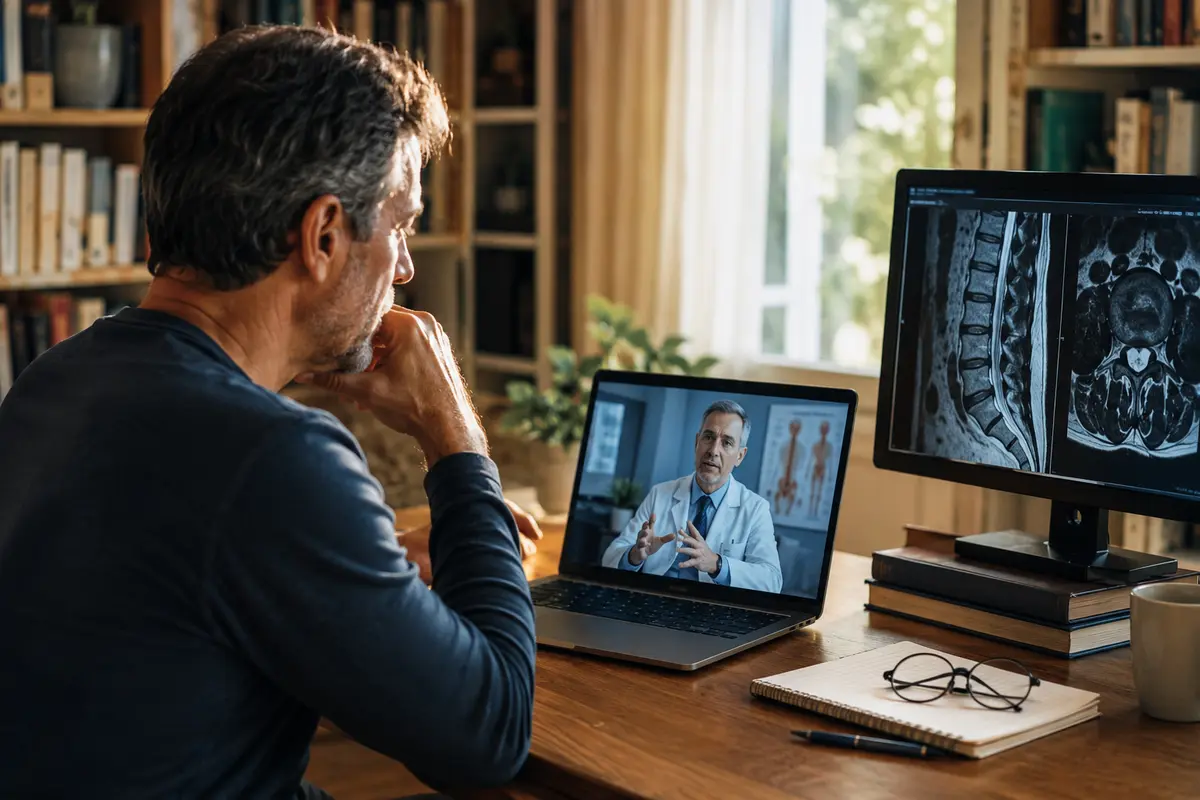
This is exactly the kind of decision where a written, independent online second opinion can help — particularly if you've been offered either a stimulator or a revision spine operation and you're not sure which is right.
FAQ
Is a spinal cord stimulator permanent?
No. Both leads and the generator can be surgically removed if the device stops helping or causes problems. That reversibility is a real advantage over fusion surgery.
How painful is the implant procedure?
The trial is typically done under local anaesthesia with sedation; the permanent implant under sedation or light general anaesthesia. Most patients describe soreness for one to two weeks at the IPG pocket.
Will it eliminate my pain completely?
Rarely. The realistic goal is meaningful reduction (often around 50% or more in responders), improved function, and lower medication use — not zero pain.
Can I fly with a spinal cord stimulator?
Yes. Carry your device identification card. Airport security may detect the device; most modern systems are safe through standard screening, but inform staff.
What happens if I need surgery later?
Most procedures can be done safely with a stimulator in place. Diathermy (electrocautery) requires precautions, and the device may need to be turned off or temporarily reprogrammed.
Should I get a second opinion before implant?
In my view, yes — especially if you've also been offered revision spine surgery, or if you're unsure your pain is truly neuropathic. An independent review of your imaging and history can clarify whether SCS, surgery, or non-operative care is the better fit.
Conclusion
A spinal cord stimulator for chronic pain is neither a miracle nor a last resort — it is a specific tool for specific problems, mainly neuropathic limb pain and failed back surgery syndrome. Used in the right patient, after honest screening and a successful trial, it can change daily life. Used in the wrong patient, it adds hardware without solving the pain.
If you're weighing a stimulator, a fusion, a revision, or "do nothing," take three concrete steps:
- Get a clear, written diagnosis based on current imaging.
- Confirm you've genuinely tried structured conservative care.
- Seek an independent second opinion — online review is a reasonable option if you can't easily access another expert centre.
This article is educational and not a substitute for in-person evaluation. Your spine, your imaging, and your goals are unique, and the best decisions are made with a clinician who has reviewed all of them.
Quick SCS Candidacy Self-Check
Tick the statements that genuinely apply to you. This is an educational tool, not medical advice.
A second opinion is recommended before any implant or revision spine surgery.