
Last updated: June 15, 2026
Quick Answer
Most spinal compression fractures in older adults heal with conservative care: short-term pain control, early mobilisation, bracing if needed, and a proper osteoporosis work-up. Surgery (kyphoplasty or vertebroplasty) is reserved for severe, persistent pain that doesn't settle after a few weeks, or specific clinical red flags. Before agreeing to any procedure, it's reasonable to get an independent second opinion, particularly when surgery is offered early.
Key Takeaways
- A vertebral compression fracture is a collapse of the front part of a spinal bone, most often from osteoporosis.
- Around two-thirds of these fractures cause little or no symptoms and are found incidentally on imaging.
- First-line spinal compression fracture treatment is conservative: analgesia, brief rest, gradual movement, and physiotherapy.
- Kyphoplasty or vertebroplasty may help when pain is severe and unresponsive after 4–6 weeks, but evidence is mixed.
- A bone-health work-up (DXA scan, vitamin D, calcium, thyroid, sometimes a fracture risk score like FRAX) is essential to prevent the next fracture.
- Red flags include new weakness, numbness, bladder or bowel changes, fever, or unrelenting night pain — seek urgent assessment.
- An independent online second opinion is worth considering before any spine procedure, especially in older patients.
What exactly is a spinal compression fracture?
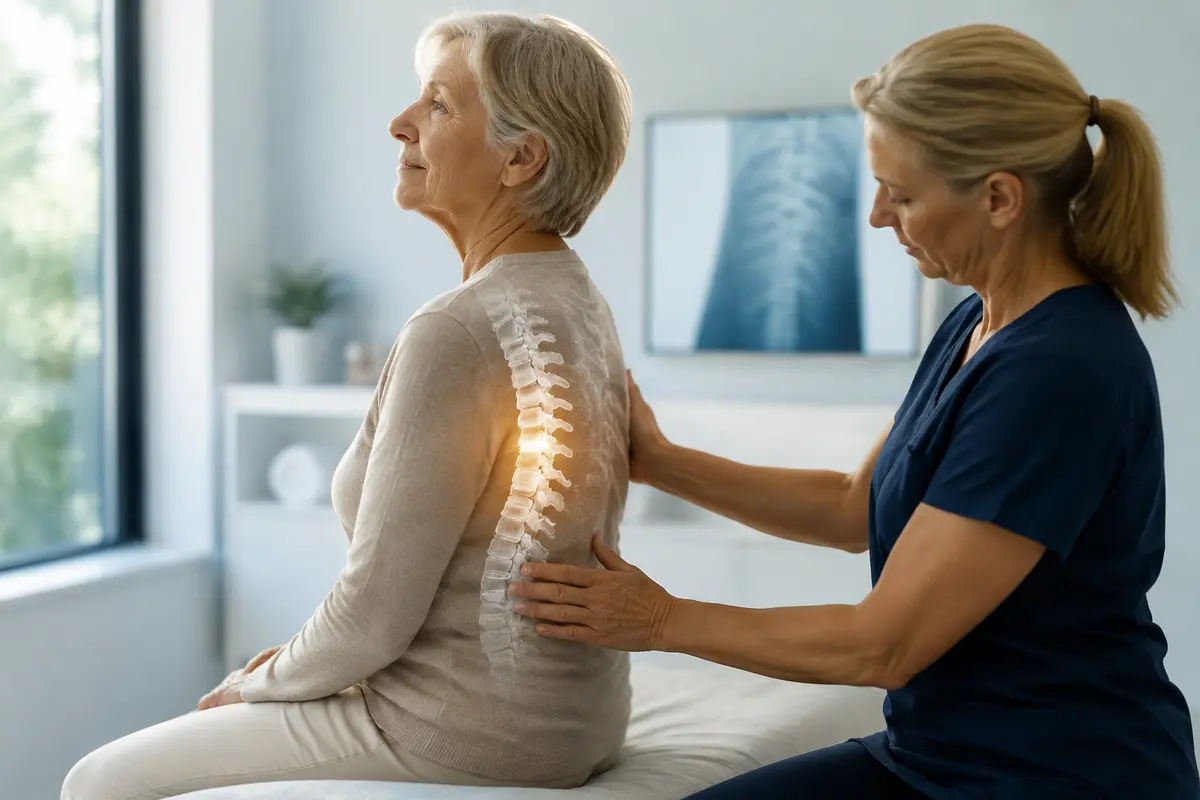
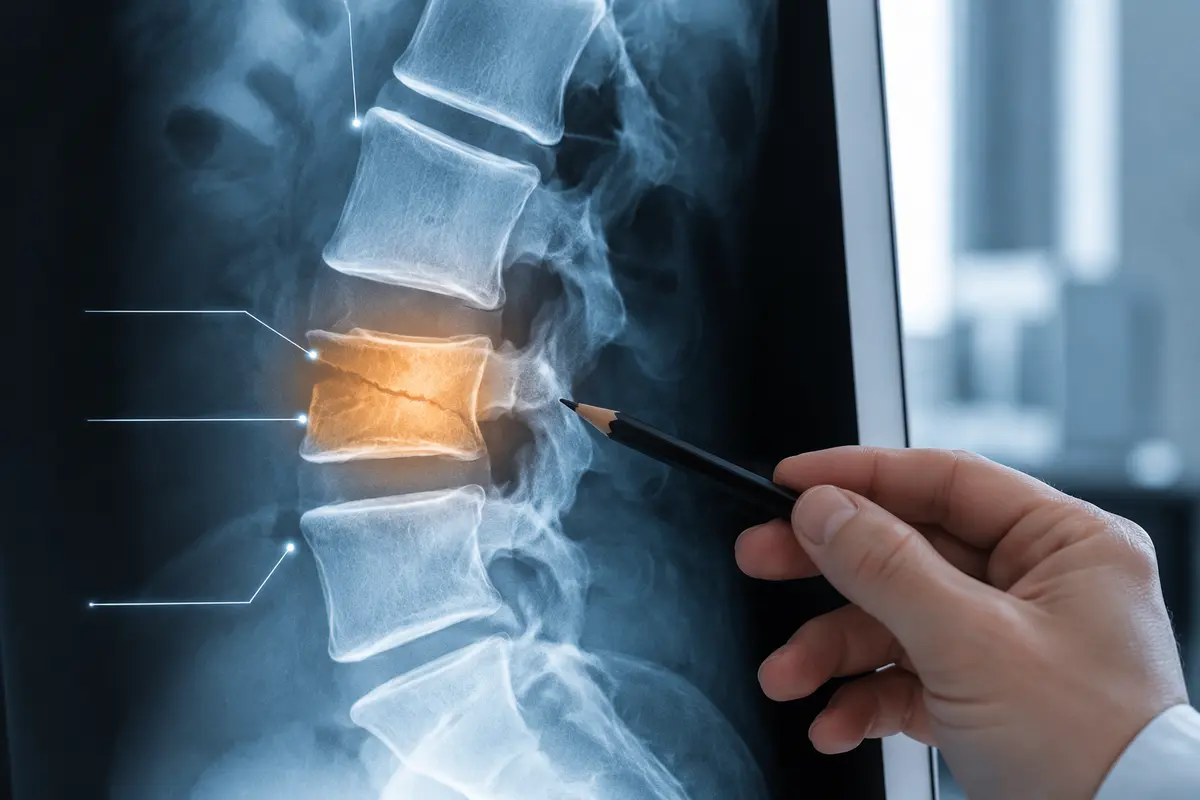
A spinal compression fracture is when a vertebra — usually in the mid or lower back — loses height because the front (anterior) portion collapses, giving the bone a wedge shape on imaging. It's the most common fragility fracture worldwide.
In older patients I see for second opinions, the cause is almost always weakened bone from osteoporosis. The fracture can happen with a minor knock, a sneeze, lifting a shopping bag, or sometimes nothing identifiable at all. That can be frightening, but it's also part of why the recovery picture is usually more favourable than people fear.
Three common shapes:
- Wedge fracture — front of the vertebra collapses, back stays intact (most common).
- Biconcave fracture — middle of the vertebra sinks, ends stay.
- Crush fracture — the whole vertebral body loses height (less common, more painful).
How serious are compression fractures in the spine?
Most are not dangerous, but they should never be ignored. A single osteoporotic fracture roughly doubles the risk of another one in the next year if bone health isn't addressed, according to data summarised by the International Osteoporosis Foundation.
Serious situations include:
- Fractures with bone fragments pressing on the spinal cord or nerves (rare in pure osteoporotic fractures).
- Fractures caused by cancer, infection, or significant trauma.
- Multiple stacked fractures leading to kyphosis ("dowager's hump"), reduced lung capacity, and balance problems.
If you have unexplained weight loss, a history of cancer, fever, or neurological symptoms, the fracture needs urgent specialist review — not watchful waiting.
Can you heal a compression fracture without surgery?
Yes — in the great majority of osteoporotic compression fractures, the bone heals on its own within 6–12 weeks with conservative care. Surgery is the exception, not the rule.
A sensible conservative plan usually includes:
- Short-term analgesia — paracetamol first, then a brief course of stronger pain relief if needed. Opioids in older adults raise the risk of falls and confusion, so they should be time-limited.
- Early, gentle movement — prolonged bed rest worsens bone loss and muscle wasting. Aim to be up and walking within a day or two, even if slowly.
- Bracing — a semi-rigid orthosis can reduce pain in the acute phase. Evidence on long-term benefit is mixed, but many patients find it reassuring for the first few weeks.
- Physiotherapy — starts gently and progresses to posture, balance, and extension-based strengthening.
- Bone-health treatment — calcium, vitamin D, and usually an anti-osteoporosis medication.
Choose conservative care first if: pain is tolerable with simple analgesia, there are no neurological signs, and imaging shows a stable osteoporotic fracture.
When do kyphoplasty or vertebroplasty actually help?
Vertebral augmentation (kyphoplasty or vertebroplasty) involves injecting bone cement into the fractured vertebra to stabilise it. It can meaningfully reduce pain in carefully selected patients, but it's not for everyone, and the evidence base is genuinely mixed.
What the evidence suggests:
- A 2018 Cochrane review of vertebroplasty for osteoporotic fractures found benefits over placebo were small and uncertain at most time points.
- Some later trials and registries (including VAPOUR, 2016) suggest benefit when the procedure is done early in patients with severe, well-localised pain from a recent fracture.
- Clinical guidelines (including NICE TA279) support augmentation in selected patients whose pain remains severe after adequate conservative care.
In my second-opinion practice, I generally consider augmentation when all of these are true:
- The fracture is recent (typically under 6–8 weeks).
- Pain is severe and clearly localised to the fractured level on examination and MRI (with oedema on STIR sequences).
- Conservative treatment for 3–6 weeks hasn't helped meaningfully.
- The patient is well enough for a short procedure under local or light sedation.
It's reasonable — and often wise — to seek an independent opinion before agreeing to cement augmentation, particularly if it's being offered in the first week or two.
How much does spinal compression fracture treatment cost?
Costs vary enormously by country, healthcare system, and whether you're treated publicly or privately. I won't quote specific figures because they're misleading across borders, but here's the general structure:
- Conservative care: GP or specialist visits, simple analgesia, a brace, physiotherapy sessions, a DXA scan, and osteoporosis medication. This is the least expensive route and is what most patients need.
- Kyphoplasty/vertebroplasty: day-case procedure costs include the surgeon, anaesthetist, imaging, cement, and hospital stay. In most European public systems this is covered; private costs vary widely.
- Open surgery (rare for osteoporotic fractures) is significantly more expensive and reserved for instability or neurological compromise.
Ask any clinician offering a procedure for a written breakdown and the clinical justification. If the indication isn't crystal clear, a second opinion costs far less than an unnecessary operation.
Who is most at risk for spinal compression fractures?
The strongest risk factors are age, female sex (post-menopause), and low bone density. Other contributors:
- Previous fragility fracture
- Long-term corticosteroid use (e.g. for asthma, polymyalgia rheumatica, rheumatoid arthritis)
- Smoking and heavy alcohol use
- Low body weight (BMI under 19)
- Family history of hip or spine fracture
- Conditions: rheumatoid arthritis, coeliac disease, hyperthyroidism, type 1 diabetes, chronic kidney disease
- Vitamin D deficiency and low dietary calcium
- Medications including some aromatase inhibitors, long-term proton pump inhibitors, and certain anticonvulsants
If two or more apply to you, ask your GP about a DXA scan and a FRAX assessment.
What treatments work best for elderly patients with compression fractures?
For older patients, the best plan balances pain control, mobility, and fall prevention — not just the fracture itself. The frailer the patient, the more I lean conservative.
A practical framework:
Common mistake: treating the fracture and forgetting the bone. Without osteoporosis treatment, the next fracture is often only months away.
How long does it take to recover from a spinal compression fracture?
Most people feel substantially better within 6–8 weeks, and bone healing is usually complete by 12 weeks. Full functional recovery — confidence, strength, balance — often takes 3–6 months.
What slows recovery:
- Prolonged bed rest
- Untreated osteoporosis (so the bone keeps weakening)
- Depression and fear of movement (kinesiophobia)
- Multiple fractures stacking up
- Poor pain control leading to disuse
Recovery isn't linear. Expect good days and bad days, particularly in the first month.
What are the best exercises for recovery after a compression fracture?
Once acute pain settles (usually 2–4 weeks), gentle, extension-based exercise is the cornerstone — not flexion. Bending forward repeatedly under load can worsen wedge deformity in osteoporotic spines.
Evidence-supported components:
- Postural extension work — chin tucks, gentle thoracic extension over a rolled towel.
- Back extensor strengthening — prone lifts progressing as tolerated. The Sinaki "spinal proprioceptive extension exercise dynamic" (SPEED) programme has shown benefit in research from Mayo Clinic.
- Balance training — single-leg stance, tandem walking, tai chi.
- Weight-bearing aerobic activity — walking daily, building up duration.
- Resistance training — twice weekly, supervised initially.
Avoid: heavy forward bending, sit-ups, deep twisting, and high-impact jumping until cleared.
Work with a physiotherapist experienced in osteoporosis. A generic gym programme can do harm here.
What are common mistakes people make during compression fracture recovery?
The mistakes I see most often in my second-opinion consultations:
- Too much rest. A few days is fine; weeks in bed accelerates bone loss.
- Forgetting the bone-health work-up. A fracture without a DXA and treatment plan is a missed opportunity.
- Forward-bending exercises. Pilates and yoga are excellent in principle, but specific forward-flexion poses can be harmful early on.
- Stopping osteoporosis medication too soon. Bisphosphonates, denosumab, and anabolic agents need proper duration.
- Rushing to surgery. Cement augmentation in week one for a fracture that would have settled on its own.
- Ignoring fall risk. Vision checks, home hazards, footwear, and medication review matter as much as the spine itself.

Are there alternative treatments besides standard medical care?
Some complementary approaches can support recovery, but none replace medical assessment and osteoporosis treatment.
Reasonable adjuncts:
- Tai chi — strong evidence for balance and fall reduction in older adults.
- Acupuncture — modest evidence for pain in some musculoskeletal conditions; low risk if practitioner is qualified.
- Heat therapy — useful for muscle spasm.
- Mindfulness and CBT — helpful for persistent pain and fear of movement.
Approaches I'd avoid relying on alone: spinal manipulation in osteoporotic spines (risk of further fracture), unverified supplements marketed for "bone regeneration", and anything that delays a proper diagnosis.
What are signs that my compression fracture is getting worse?
Most fractures improve steadily. Warning signs that something else is going on:
- New or worsening leg weakness, numbness, or tingling
- Loss of bladder or bowel control
- Pain that wakes you at night and won't settle
- Fever, weight loss, or night sweats
- A new "bend" in your back or sudden height loss
- Sharp pain at a new spinal level
Any of these warrant urgent in-person assessment — not a wait-and-see approach.
What pain management techniques work for spinal compression fractures?
A layered approach works best:
- Paracetamol regularly, not just when pain peaks.
- Short course NSAIDs if kidney function and stomach allow.
- Weak opioids (e.g. low-dose tramadol) briefly if needed.
- Calcitonin nasal spray — older evidence suggests modest short-term benefit for acute vertebral fracture pain.
- Topical heat and TENS for muscle spasm.
- Bracing for 2–6 weeks if pain reduces meaningfully with it on.
- Physiotherapy as soon as tolerated.
Avoid long opioid courses in older adults — falls, constipation, and confusion outweigh the benefit.
When should I see a doctor about a potential compression fracture?
See a clinician promptly if you're over 50 and have new mid- or lower-back pain, especially after a minor fall, a sudden movement, or no obvious cause. Earlier diagnosis means earlier bone-health treatment and a lower risk of the next fracture.
Go to A&E or urgent care if pain is accompanied by any neurological symptoms, after significant trauma, or with red flags listed above.
"The fracture is the messenger. The real diagnosis is usually osteoporosis — and that's the one that needs treating for the long term."
FAQ
Is surgery usually needed for a compression fracture?
No. The majority heal with conservative care within 6–12 weeks. Surgery is reserved for severe persistent pain, instability, or neurological involvement.
How quickly should kyphoplasty be done if it's recommended?
There's no emergency. Evidence suggests it may help most when done within the first several weeks of a recent, painful fracture — but only after conservative care has been tried or is clearly insufficient.
Will my spine ever be the same?
Pain usually settles substantially. Some height loss or mild curvature may remain, particularly with multiple fractures. Strength and confidence often improve for 6–12 months.
Do I need an MRI?
Often yes, especially if a procedure is being considered. MRI shows whether the fracture is recent (bone oedema) and rules out other causes like infection or tumour.
Should I take calcium and vitamin D?
Most older adults benefit from adequate vitamin D and dietary calcium. Talk to your GP about levels and dosing — more isn't always better.
Is it worth getting an online second opinion before surgery?
Yes, particularly for elective spine procedures. An independent review of your imaging and notes can confirm or reframe the plan before you commit.
Conclusion: What to do next
If you've been told you have a spinal compression fracture, the most important steps are usually the simplest:
- Get a clear diagnosis with appropriate imaging (X-ray, often MRI).
- Start conservative spinal compression fracture treatment — pain control, early movement, physiotherapy.
- Arrange a proper bone-health work-up: DXA scan, vitamin D, calcium, and a treatment plan for osteoporosis.
- Avoid forward-bending exercises early on; favour gentle extension and balance work.
- If surgery is being recommended — especially in the first weeks — consider an independent second opinion before agreeing.
This article is educational and not a substitute for in-person medical assessment. If you'd like an independent review of your imaging and treatment plan, an online spine second opinion can help you make a more confident decision about whether surgery is truly the right next step.