
Last updated: June 28, 2026
Quick Answer
Spine surgery is generally safe when performed by an experienced surgeon on a carefully selected patient, but it's not risk-free. Major complication rates for common elective procedures (such as lumbar microdiscectomy or single-level decompression) typically sit in the low single digits, while larger reconstructive operations carry higher risk. The real question isn't only "is spine surgery safe?" but "do the likely benefits outweigh the risks for me — and have I exhausted reasonable alternatives first?" An independent second opinion is one of the most useful steps you can take before deciding.
Key Takeaways
- Most modern elective spine operations have low rates of serious complications, but risk varies widely by procedure, age, and overall health.
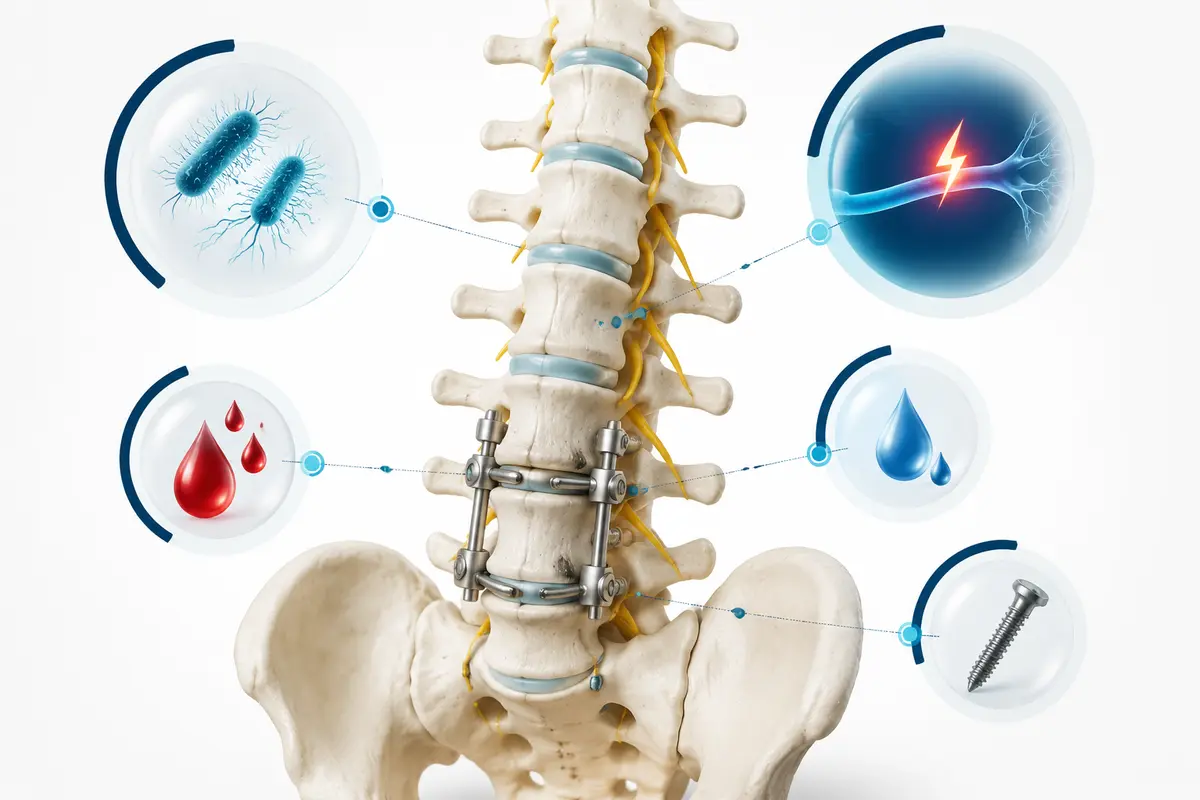
- Complications fall into predictable categories: general surgical, neurological, hardware-related, and long-term (such as adjacent segment problems).
- Many spine conditions improve with conservative care; surgery is usually elective and rarely urgent.
- True emergencies — cauda equina syndrome, progressive weakness, spinal infection or tumour, unstable trauma — do require prompt surgical assessment.
- Minimally invasive techniques can reduce blood loss and recovery time, but they're not automatically "safer" for every condition.
- Surgeon experience and case volume are among the strongest predictors of a good outcome.
- A structured second opinion (in person or online) helps you confirm the diagnosis, the indication, and the proposed procedure before committing.
Is spine surgery safe in 2026? The honest answer
As a board-certified, DWG-certified spine surgeon based in Stolberg, Germany, I'll give you the answer I give my own patients: yes, spine surgery is reasonably safe for the right person with the right diagnosis — but "safe" is relative. A single-level lumbar microdiscectomy for a clearly herniated disc with matching leg pain is a very different operation, with very different risk, from a multi-level thoracolumbar fusion for adult deformity.
Three things drive safety more than anything else:
- The right indication. Surgery only helps if the imaging finding actually explains your symptoms.
- The right patient. Age, smoking, diabetes, obesity, osteoporosis and frailty all shift risk.
- The right team. Surgeon experience, hospital volume, anaesthetic care, and rehabilitation pathways.
If any one of those three is weak, even a "minor" operation can disappoint.
What are the risks of spine surgery?
Every spine operation carries some risk. The honest categories are:
General surgical risks (apply to almost any operation): infection, bleeding, blood clots (DVT/pulmonary embolism), anaesthetic complications, urinary or chest problems, and slow wound healing.
Spine-specific risks:
- Dural tear / CSF leak — a tear in the lining around the nerves, usually repairable but sometimes causing headache or prolonged recovery.
- Nerve injury — ranging from temporary numbness or weakness to, rarely, permanent deficit or paralysis. Serious neurological injury is uncommon in elective lumbar surgery but is the risk patients fear most.
- Hardware-related problems — screw malposition, loosening, or breakage in fusion procedures.
- Non-union (pseudarthrosis) — the fusion fails to heal solidly.
- Recurrent disc herniation — after discectomy, somewhere around 5–15% in published series.
- Adjacent segment disease — levels next to a fusion can wear out faster over years.
- Persistent or new pain — sometimes called "failed back surgery syndrome" when pain continues despite a technically successful operation.
No surgeon can promise you'll avoid all of these. A good surgeon can tell you, based on your specific imaging and health profile, which risks are most relevant for you.
How common are complications from spine surgery?
Complication rates depend heavily on the procedure. Published data from large registries and systematic reviews give us rough ranges:
- Lumbar microdiscectomy: serious complications generally in the low single digits; reoperation rates around 5–15% over several years.
- Single-level lumbar decompression: similar profile, low rate of major neurological injury.
- Lumbar fusion (one to two levels): higher overall complication rates, often cited in the 10–20% range when minor events are included.
- Cervical disc replacement or anterior cervical discectomy and fusion (ACDF): generally well-tolerated; hoarseness or swallowing difficulty can occur but usually resolves.
- Adult deformity / multi-level reconstruction: the highest risk category, with major complication rates that can exceed 20–30% depending on the series.
These ranges come from peer-reviewed sources (PubMed-indexed cohort studies, Cochrane reviews, and society guidelines from bodies such as NICE and the WFNS). Your individual risk may be higher or lower.
What's the recovery time after spine surgery?
Recovery depends on the procedure, not on optimism. Typical expectations:
Bone healing after a fusion takes around 6–12 months regardless of how well you feel at six weeks. Pushing too hard early is one of the most common avoidable setbacks I see.
Spine surgery success rates by type
"Success" usually means meaningful pain reduction, improved function, and patient satisfaction at 1–2 years. General patterns from the literature:
- Microdiscectomy for sciatica with matching MRI: roughly 80–90% report good leg-pain relief.
- Decompression for lumbar spinal stenosis: around 70–80% improvement in walking distance and leg symptoms.
- ACDF for cervical radiculopathy: typically 80–90% relief of arm pain.
- Lumbar fusion for instability or spondylolisthesis with leg pain: generally favourable, often 70–80%.
- Fusion for pure axial back pain (no clear instability): results are much less reliable, and this is the indication where second opinions matter most.
Success drops when the imaging finding doesn't clearly match the symptoms.
When do you actually need spine surgery?
You need surgery urgently in a small number of situations: cauda equina syndrome (saddle numbness, new bladder or bowel dysfunction, severe bilateral leg symptoms), progressive neurological weakness, spinal infection or tumour, and unstable trauma. These are emergencies — get to a hospital.
Beyond that, almost all spine surgery is elective. Reasonable indications include:
- Persistent radicular pain (sciatica, arm pain) lasting beyond 6–12 weeks despite proper conservative care, with matching imaging.
- Neurogenic claudication from stenosis that limits your daily life.
- Clear structural instability (such as spondylolisthesis with symptoms).
- Deformity causing functional or neurological problems.
If your only symptom is back pain without leg symptoms, and your MRI shows "degenerative changes," surgery is rarely the right first answer.
Alternatives to spine surgery for back pain
Most back pain — even with scary-looking MRI findings — improves with non-surgical care. Reasonable alternatives include:
- Structured physiotherapy with an active, exercise-based approach.
- Activity modification rather than bed rest.
- Weight management and smoking cessation (both directly affect spine healing).
- Medication for short-term symptom control, used judiciously.
- Targeted injections (epidural, facet, nerve root blocks) for diagnostic and therapeutic purposes.
- Cognitive behavioural approaches for chronic pain, which Cochrane reviews support.
NICE guidance on low back pain and sciatica emphasises non-surgical care first for most patients, with surgery considered when conservative treatment has genuinely failed and symptoms match imaging.
Is physical therapy better than spine surgery?
For most non-emergency back pain, physiotherapy is the right first step — and often the only step needed. Several randomised trials comparing surgery with structured non-operative care for lumbar disc herniation and stenosis have shown that surgery can give faster relief, but at 1–2 years many non-operative patients catch up. The trade-off: surgery offers quicker improvement with upfront risk; physiotherapy is slower but lower risk.
Choose physiotherapy first if: symptoms are tolerable, no red flags, and you can commit to 6–12 weeks of active rehabilitation. Consider surgery if: severe pain persisting despite proper conservative care, progressive neurological signs, or true emergencies.
Minimally invasive vs open spine surgery risks
Minimally invasive spine surgery (MISS) uses smaller incisions, tubular retractors, and sometimes endoscopes. The advantages are real but modest: less blood loss, shorter hospital stay, and often faster early recovery. The catch:
- Long-term outcomes for the right indication are similar to open surgery in most comparative studies.
- The learning curve is steep. A less-experienced MISS surgeon may have higher complication rates than an experienced open surgeon.
- Not every condition is suitable for a minimally invasive approach.
"Minimally invasive" is not automatically "safer." Surgeon experience with the specific technique matters more than the marketing label.
Spine surgery for older adults: is it safe?
Age alone is not a contraindication. Healthy patients in their 70s and 80s routinely do well after decompression for stenosis, often with dramatic improvement in walking. What matters more than age:
- Cardiac and pulmonary fitness
- Bone quality (osteoporosis affects fusion and screw fixation)
- Frailty and nutritional status
- Cognitive function and home support for recovery
For older adults, less invasive decompression without fusion is often preferred when feasible. Large reconstructive surgery in frail patients carries substantial risk and deserves careful, unhurried discussion.
How to choose a spine surgeon
The surgeon matters more than the hospital brand. Practical criteria:
- Board certification and recognised spine fellowship or sub-specialist training (in Germany, for example, DWG certification).
- Case volume for your specific procedure — ask how many they perform each year.
- Willingness to discuss alternatives, including doing nothing.
- Clear, written explanation of risks and expected benefits, not a sales pitch.
- Willingness to support a second opinion. A confident surgeon welcomes it.
If a surgeon recommends a major operation at the first visit without exhausting conservative care, that's a reason to pause — not necessarily to refuse, but to seek another view.
What happens if spine surgery goes wrong?
Most complications are manageable when caught early. A dural tear is usually repaired in the same operation. Infections are treated with antibiotics and sometimes a washout. Hardware problems may need revision. Serious neurological injury is rare but, when it happens, can be life-changing — which is exactly why the indication for surgery has to be solid.
If something feels wrong after surgery — new weakness, worsening pain, fever, wound drainage, bladder or bowel changes — contact your surgical team immediately. Do not wait.
How long does spine surgery last?
Two meanings here. The operation itself ranges from about 45–90 minutes for a microdiscectomy to many hours for deformity correction. More importantly, how long do the results last? A well-indicated microdiscectomy or decompression often gives durable relief for many years, though some patients develop new problems at adjacent levels over time. Fusions are designed to be permanent; the hardware usually stays in place for life unless it causes problems.
Spine surgery cost and insurance coverage
Costs vary enormously by country and health system, and I won't pretend there's a single number. In publicly funded systems (UK NHS, German statutory insurance, and many European systems), medically indicated spine surgery is generally covered. In private systems, costs can range from a few thousand to tens of thousands of euros or pounds depending on the procedure and length of stay. Always confirm coverage and out-of-pocket costs with your insurer before scheduling. An online second opinion is usually a small fraction of the cost of surgery and can prevent an unnecessary operation entirely.
Why a second opinion is one of the safest things you can do
In my own practice providing online spine second opinions, a meaningful share of patients learn that their proposed surgery is either not yet needed, could be replaced with a smaller procedure, or is genuinely the right choice — in which case they go ahead with much more confidence. All three outcomes are useful.
A good second opinion reviews:
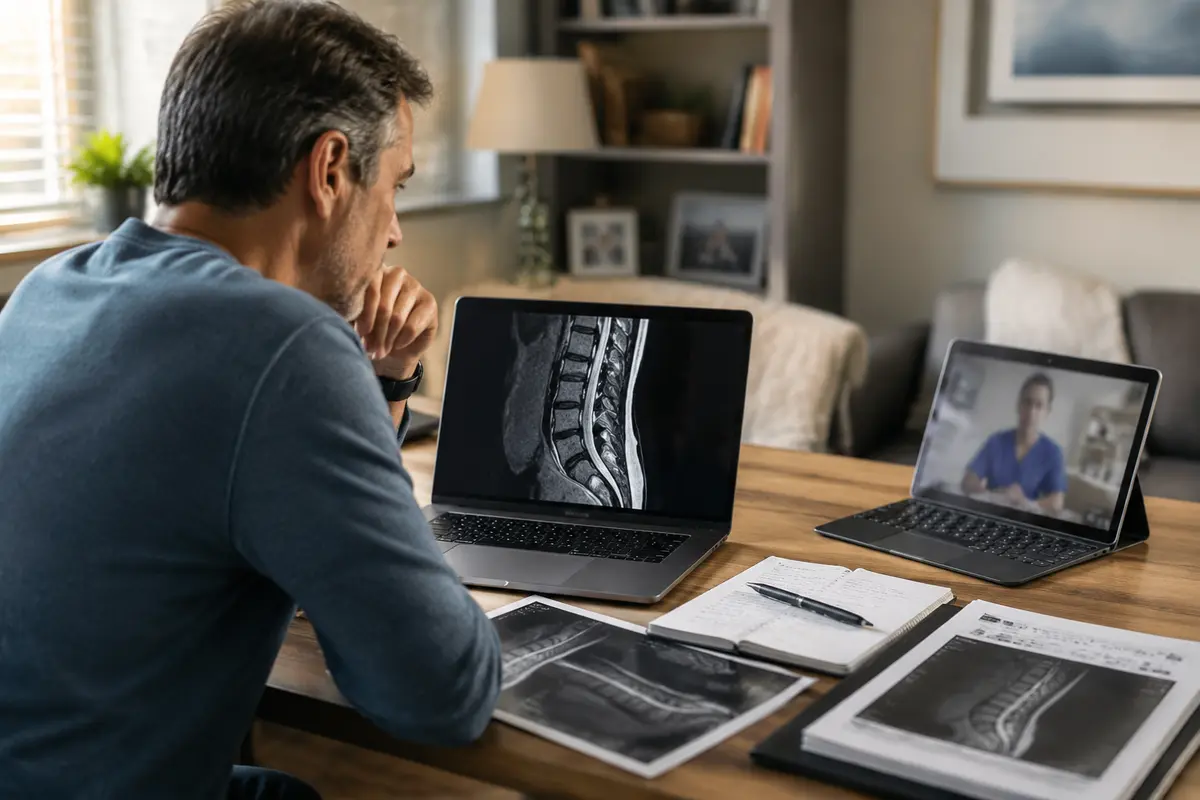
- Your actual imaging (not just the report)
- Whether the imaging findings match your symptoms
- What conservative options remain
- Whether the proposed procedure fits the diagnosis
- Realistic expected benefit and risk for you specifically
This is education, not a replacement for in-person care. But before any elective spine operation, a structured independent review is one of the highest-value steps you can take.
FAQ
Is spine surgery safe for most patients?
For carefully selected patients with clear indications, common elective spine procedures have low rates of serious complications. Safety depends heavily on diagnosis, patient health, and surgeon experience.
What is the most common complication of spine surgery?
Minor complications such as wound issues, transient nerve irritation, or dural tears are most common. Serious permanent neurological injury is rare in elective lumbar surgery.
Can I avoid spine surgery with exercise?
Often yes. Most non-emergency back and even leg pain improves with structured physiotherapy, activity modification, and time. Surgery becomes reasonable when proper conservative care has genuinely failed.
How do I know if I really need surgery?
You likely need urgent surgery only with red-flag symptoms (cauda equina, progressive weakness, infection, tumour, unstable trauma). Otherwise, elective surgery is a choice — and a second opinion helps you make it well.
Is minimally invasive spine surgery always better?
No. It offers shorter recovery for suitable cases, but long-term outcomes are similar to open surgery for the right indication. Surgeon experience matters more than the label.
How can I get an independent online spine second opinion?
You can upload your MRI and clinical history to a qualified spine surgeon who offers remote reviews. It's an educational opinion, not a replacement for in-person assessment, but it can confirm — or challenge — a surgical recommendation before you commit.
Conclusion: making a safer decision
Is spine surgery safe? For the right patient, with the right diagnosis, in the right hands — yes, reasonably so. But "safe" is not the same as "necessary." The most important safety decision happens before you reach the operating theatre: confirming that surgery is genuinely the best option for your problem.
Practical next steps:
- Get your imaging and reports together. You own this data.
- List your symptoms clearly — what hurts, where, when, and how it affects your life.
- Document what you've already tried — physiotherapy, medications, injections, time.
- Ask your surgeon specific questions about the indication, risks, and alternatives.
- Consider an independent second opinion before any elective spine procedure.
If you'd like an educational, independent review of your case from a DWG-certified spine surgeon, an online second opinion is a low-risk way to confirm — or rethink — a surgical recommendation. Either way, the goal is the same: a decision you can stand behind.