

Last updated: June 3, 2026
Roughly 10 to 40 percent of patients who undergo lumbar spine surgery continue to have significant pain afterwards, depending on the procedure and population studied (North American Spine Society; PubMed). That ongoing pain has a name: failed back surgery syndrome. If you are living with it, the most important decision you face is rarely "which surgeon should operate next?" It is usually "should anyone operate again at all?"
Quick Answer
Failed back surgery syndrome (FBSS), also called post-laminectomy syndrome or persistent spinal pain syndrome type 2, refers to ongoing back or leg pain after one or more spine operations. It is not a single disease but an umbrella term with many possible causes, from wrong original diagnosis to scar tissue, hardware problems, adjacent segment disease, or nerve injury. Repeat surgery helps only a minority of patients, and outcomes get worse with each additional operation. Before agreeing to revision surgery, an independent second opinion is one of the highest-value steps you can take.
Key Takeaways
- FBSS is a clinical label, not a diagnosis. The real question is always: what specifically is causing the pain now?
- Re-operation is not usually the answer. Published outcome data show declining success rates with each subsequent lumbar surgery.
- Non-surgical treatment helps many patients, including targeted physiotherapy, multidisciplinary pain programmes, and neuromodulation.
- A wrong original indication is one of the most common, and most preventable, causes of FBSS.
- Imaging alone never justifies surgery. Scans must match the clinical picture.
- An independent online second opinion can clarify whether more surgery is realistic before you commit.
- FBSS is not always permanent; many patients improve substantially with the right combination of treatments.
What exactly is failed back surgery syndrome?
Failed back surgery syndrome is persistent or recurrent back and/or leg pain after one or more spinal surgeries, despite the operation being technically completed. The International Association for the Study of Pain now prefers the term Persistent Spinal Pain Syndrome type 2 (PSPS-2) because "failed" wrongly implies that someone did something wrong; often the surgery was performed correctly but could not solve the underlying pain generator.
In plain language, FBSS describes an outcome, not a cause. Two patients with the same label can have completely different problems: one may have a recurrent disc herniation, another may have neuropathic pain from a nerve that was already damaged before surgery, and a third may simply have been operated on for pain that was never going to respond to surgery in the first place.
How common is failed back surgery syndrome?
Reported rates vary widely, but most peer-reviewed estimates place the incidence somewhere between 10% and 40% of lumbar spine surgeries, depending on the procedure, indication, and how "failure" is defined (sources: PubMed reviews on FBSS epidemiology; NICE guidance on low back pain and sciatica).
- Microdiscectomy for a clear disc herniation with matching leg pain has the lowest failure rate, often under 10–15%.
- Multilevel lumbar fusions for non-specific back pain have the highest, sometimes approaching 30–40%.
- Revision surgeries fail more often than first operations.
The numbers should not frighten you, but they should inform you. Spine surgery is not a guaranteed fix, and the indication matters more than the surgeon's skill.
What are the main symptoms of failed back surgery syndrome?
The hallmark of FBSS is pain that persists, returns, or changes character after spine surgery. The pattern often points toward the cause.
Common symptoms include:
- Ongoing low back pain, often worse than before surgery
- Leg pain (sciatica) that returned, never resolved, or appeared on the opposite side
- Burning, electric, or pins-and-needles pain suggesting neuropathic involvement
- New numbness or weakness in the legs or feet
- Pain that worsens with standing or walking (claudication-like)
- Stiffness, reduced range of motion, and muscle deconditioning
- Sleep disturbance, low mood, and reduced function — common with chronic pain
A useful distinction: pain that improved for weeks or months and then returned often points to a new problem (re-herniation, adjacent segment disease, hardware loosening). Pain that never went away more often suggests the original surgery was not addressing the true pain generator.
Why does back surgery sometimes fail?
Back surgery fails when the operation does not, or cannot, treat the actual source of the patient's pain. In my second-opinion practice, the causes I see most often fall into five buckets.
1. Wrong original indication. Surgery was offered for pain that imaging "explained" but that was not surgically treatable — for example, fusing a degenerated disc in a patient whose pain pattern did not match the disc level.
2. Wrong level or incomplete decompression. The right operation was done at the wrong segment, or a stenosis was not fully relieved.
3. Recurrent or new pathology. Re-herniation of a disc, new stenosis above or below a fusion (adjacent segment disease), or progressive degeneration.
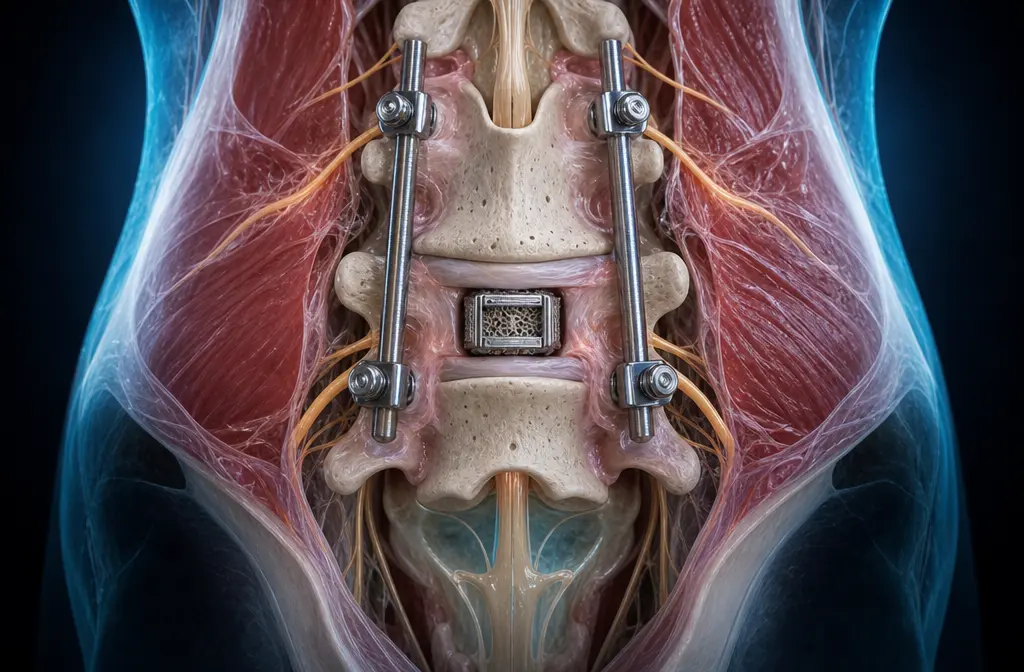
4. Mechanical or hardware problems. Pseudarthrosis (failed fusion), screw malposition, cage subsidence, or implant loosening.
5. Nerve injury or central sensitisation. Nerves can remain irritated or damaged even after a technically perfect operation, and chronic pain can rewire the nervous system itself.
Scar tissue (epidural fibrosis) is often blamed, but high-quality studies suggest it is a less common standalone cause than was previously thought.
Who is most likely to develop failed back surgery syndrome?
Some patient and surgical factors raise the risk meaningfully. These are well documented in the spine literature:
- Surgery for axial back pain without clear nerve compression (especially fusion for "discogenic" pain)
- Multiple previous spine operations
- Smoking (impairs fusion and healing)
- Obesity and deconditioning
- Diabetes
- Untreated depression, anxiety, or significant psychosocial stress
- Workers' compensation or litigation contexts (consistently associated with worse outcomes in studies)
- Long duration of pain before surgery (over 12 months)
- Widespread pain or central sensitisation preoperatively
If several of these apply to you, that is not a reason for despair — it is a reason to be especially careful about the indication for any further surgery.
How do doctors diagnose failed back surgery syndrome?
Diagnosis is clinical first, imaging second. A careful evaluation should always include:
- Detailed history: when pain started, how it changed after each operation, what makes it better or worse, character (mechanical vs neuropathic).
- Physical examination: neurological assessment, gait, provocation tests, surgical scar inspection.
- Review of all previous operative reports and imaging — not just the latest MRI.
- Updated imaging: MRI with and without contrast (contrast helps distinguish scar from recurrent disc), CT for bony detail and hardware, flexion-extension X-rays for instability.
- Selective diagnostic injections where appropriate (e.g. nerve root blocks, facet blocks) to identify the actual pain generator.
- Psychosocial screening for depression, anxiety, and pain catastrophising — these change treatment, not just prognosis.
A common mistake is to order a new MRI, see "something," and assume that something is the cause. Imaging findings are extremely common in pain-free people. The finding must match the symptoms.
What are the biggest mistakes patients make after back surgery?
From the second opinions I review each week, these are the patterns I see most often:
- Agreeing to revision surgery based on imaging alone, without a clear, testable hypothesis about which structure is generating pain.
- Returning to the same surgeon for a third or fourth opinion without ever getting a truly independent view.
- Stopping all activity out of fear of "damaging" the spine, leading to deconditioning that worsens pain.
- Relying on opioids long-term rather than building a multimodal plan.
- Ignoring sleep, mood, and stress, which strongly modulate chronic spinal pain.
- Rushing. Outside of red flags (progressive weakness, cauda equina, infection, tumour, fracture), there is almost always time to think.
Why re-operation is often not the answer
Each additional lumbar surgery tends to have a lower success rate than the one before it. Published series suggest meaningful improvement in roughly 50% of second operations, 30% of third, and 15% or fewer of fourth procedures, with complication rates climbing in parallel (PubMed reviews on revision lumbar surgery outcomes).
That doesn't mean revision surgery is never right. A clearly recurrent disc herniation pressing on a nerve root that matches the patient's leg pain, for example, can do very well with re-operation. But for axial back pain, scar tissue, or "something looks off on the MRI" without a clean clinical correlate, more surgery frequently makes things worse.
In my experience, the most valuable thing a spine surgeon can sometimes offer a post-surgical patient is an honest "no."
What pain management and alternative treatments exist for failed back surgery syndrome?
A modern, evidence-based approach to FBSS is multidisciplinary and stepped. The goal is function and quality of life, not a pain score of zero.
Commonly used, evidence-supported options include:
- Structured physiotherapy and graded exercise — the single most underused treatment
- Pain neuroscience education and cognitive behavioural therapy for chronic pain
- Pharmacological management: neuropathic agents (e.g. gabapentinoids, duloxetine), short courses of NSAIDs where safe; cautious, time-limited use of opioids
- Image-guided injections: epidural steroids, selective nerve root blocks, facet or sacroiliac interventions where indicated
- Radiofrequency ablation for facet-mediated pain
- Spinal cord stimulation (SCS): among the better-studied options specifically for FBSS with predominant neuropathic leg pain; Cochrane and NICE have both reviewed the evidence
- Multidisciplinary pain rehabilitation programmes
- Lifestyle factors: sleep, smoking cessation, weight management, stress
How much does treatment for failed back surgery syndrome cost?
Costs vary enormously by country, healthcare system, and the specific treatment pathway, so any single figure would be misleading. What I can say is this:
- Conservative and multidisciplinary care is almost always less expensive than revision surgery, and often more effective for chronic FBSS.
- Neuromodulation (spinal cord stimulation) has substantial upfront device and implantation costs but, in selected patients, has shown cost-effectiveness over several years in published health-economic analyses.
- Revision surgery costs include not only the operation but also rehabilitation, time off work, and the risk of further procedures.
The cheapest pathway, financially and physically, is usually the one that avoids an operation you didn't truly need in the first place. That is exactly where a second opinion pays off.
Can you prevent failed back surgery syndrome?
You cannot eliminate the risk, but you can reduce it substantially. The most powerful prevention happens before the first operation.
A short checklist I share with second-opinion patients considering surgery:
- Is there a clear, specific diagnosis (not just "degenerative changes")?
- Do the symptoms match the imaging in level and side?
- Has non-surgical treatment been given a fair trial (typically at least 6–12 weeks for non-emergencies)?
- Is the proposed surgery supported by good evidence for this indication?
- Have modifiable risk factors (smoking, deconditioning, untreated depression) been addressed?
- Has an independent second opinion confirmed the plan?
If you cannot tick all six, slow down.

What are the risks of additional surgeries after a failed procedure?
Revision spine surgery carries higher risks than primary surgery, including:
- Greater blood loss and longer operative time
- Higher rates of dural tears and nerve injury due to scar tissue
- Increased infection risk
- Higher rates of pseudarthrosis (failed fusion)
- Adjacent segment disease above or below the fused area
- Lower probability of meaningful pain relief
- Psychological impact of another operation that does not work
This is not a reason to refuse appropriate revision surgery. It is a reason to be certain it is appropriate.
Is failed back surgery syndrome permanent?
Not necessarily. FBSS is a chronic condition for many patients, but "chronic" is not the same as "unchangeable." With a correct re-diagnosis and a structured, multidisciplinary plan, a substantial proportion of patients regain meaningful function and reduce pain to a manageable level. Some, with clearly correctable problems, can improve dramatically. The honest answer is that outcomes depend on the underlying cause, your overall health, and the quality of the treatment plan, and no responsible clinician can guarantee a result.
Decision guide: more surgery or not?
This is a guide, not a rule. Your case deserves an individual assessment.
The case for an independent online second opinion
If you are being offered revision spine surgery, an independent second opinion from a surgeon who will not operate on you removes a structural conflict of interest. Online second opinions make this accessible regardless of where you live. A good second opinion should:
- Review all previous imaging and operative reports, not just the latest scan
- Reconcile your symptoms with the imaging
- Discuss non-surgical options honestly
- Give you a clear answer on whether the proposed surgery is indicated
- Respect that the final decision is yours, made together with your treating team
I offer this kind of review in my own practice, and I encourage patients to seek it from any qualified, independent spine surgeon — not necessarily me. The value is in the independence, not the name on the report.
FAQ
Is failed back surgery syndrome a real medical diagnosis?
Yes, though many specialists now prefer the term Persistent Spinal Pain Syndrome type 2. It describes ongoing pain after spine surgery and appears in major pain medicine classifications.
How long after surgery is it considered "failed"?
There is no fixed cut-off, but pain that persists or returns beyond the expected recovery window (typically 3–6 months for most lumbar procedures) and remains functionally limiting is generally considered FBSS.
Can scar tissue alone cause failed back surgery syndrome?
It can contribute, but high-quality studies suggest pure epidural fibrosis is a less common standalone cause than once thought. Most patients labelled with "scar tissue pain" have other contributors.
Should I get a second opinion before revision spine surgery?
In nearly every non-emergency case, yes. Revision surgery has lower success rates and higher risks than primary surgery, and a truly independent opinion can change the plan substantially.
Is spinal cord stimulation worth considering?
For selected patients with predominantly neuropathic leg pain after lumbar surgery, spinal cord stimulation has reasonable evidence and is included in major guidelines. It is not appropriate for everyone, and a trial period is typically used to test response.
Can I avoid surgery altogether and still improve?
Many patients with FBSS improve significantly with a structured non-surgical plan combining physiotherapy, pain education, targeted medication, and where appropriate, injections or neuromodulation. Whether this is realistic in your case depends on the underlying cause.
Conclusion
Failed back surgery syndrome is common, complex, and deeply frustrating, but it is not a dead end. The single most important step after a spine operation that did not work is to step back and ask what is actually causing the pain now, rather than assuming another operation will fix it. For many patients, the right next move is not the operating theatre. It is a careful re-evaluation, a structured non-surgical plan, and an honest, independent opinion.
If you are considering revision spine surgery, I would encourage you to do three things this week: gather all of your previous imaging and operative reports, write down a clear timeline of your symptoms, and seek an independent second opinion before committing. This article is educational and does not replace an in-person assessment, but it should help you ask better questions of whichever team you trust with your spine.
Should I get a second opinion before revision spine surgery?
Tick each statement that applies to you. Educational only — not medical advice.