Last updated: May 31, 2026
Quick Answer: Most cervical herniated discs improve with conservative treatment — physiotherapy, pain management, and time — within 6 to 12 weeks. Surgery such as anterior cervical discectomy and fusion (ACDF) or cervical disc replacement is typically reserved for patients with progressive neurological deficits, myelopathy, or pain that fails to respond to structured non-operative care. Before agreeing to surgery, getting an independent second opinion can help confirm whether an operation is truly necessary.
Key Takeaways
- Roughly 80–90% of patients with a cervical herniated disc experience meaningful improvement without surgery, according to published natural-history studies.
- Arm pain (radiculopathy) caused by nerve compression is the most common symptom and usually responds well to conservative cervical herniated disc treatment.
- Myelopathy — spinal cord compression causing clumsiness, gait problems, or hand weakness — is a red flag that often requires surgical evaluation without delay.
- ACDF and cervical disc replacement are effective surgical options, but they carry real risks and should only be considered when clear clinical criteria are met.
- An online second opinion from an independent spine specialist can help you understand whether surgery is appropriate for your specific situation.
- Exercises focusing on posture, deep neck flexor strengthening, and gentle mobility are central to recovery.
- Common mistakes include rushing to surgery too early, relying solely on imaging findings, and neglecting structured rehabilitation.
What Exactly Is a Cervical Herniated Disc?
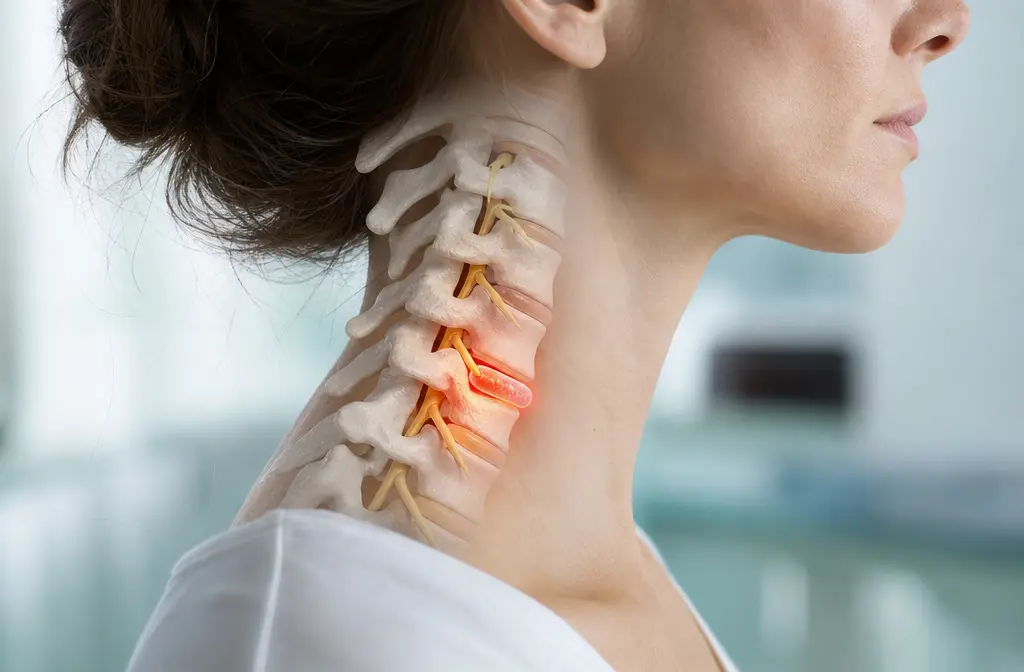
A cervical herniated disc occurs when the soft inner core (nucleus pulposus) of a disc in the neck pushes through a tear in the outer ring (annulus fibrosus) and compresses a nearby nerve root or, less commonly, the spinal cord itself. The cervical spine has seven vertebrae (C1–C7), and herniations most often affect the C5–C6 and C6–C7 levels.
Key anatomy points:
- Annulus fibrosus — the tough outer layer of the disc
- Nucleus pulposus — the gel-like centre that acts as a shock absorber
- Nerve root — exits the spinal canal at each level; compression causes radiculopathy (arm pain, numbness, weakness)
- Spinal cord — runs through the centre of the canal; compression causes myelopathy (coordination problems, balance issues, hand clumsiness)
Not every disc bulge seen on MRI is clinically significant. Studies have shown that a large proportion of people without any neck symptoms have disc bulges on imaging. This is why treatment decisions must always be guided by the clinical picture — your symptoms and neurological examination — not the MRI alone.
How Do I Know If My Neck Pain Is from a Herniated Disc?
The hallmark of a cervical disc herniation is radiculopathy: pain that radiates from the neck into the shoulder, arm, or hand, often following a specific nerve distribution (dermatome). Neck pain alone, without arm symptoms, is less likely to be caused by a significant herniation.
Symptoms that suggest a cervical herniated disc:
- Sharp or burning pain radiating down one arm
- Numbness or tingling in specific fingers (e.g., thumb and index finger for C6, middle finger for C7)
- Weakness in a particular muscle group (e.g., biceps for C6, triceps for C7)
- Pain worsened by looking up or turning the head toward the affected side (Spurling's test)
When to seek urgent evaluation:
- Difficulty walking or feeling unsteady on your feet
- Loss of fine motor skills (dropping objects, difficulty with buttons)
- Bladder or bowel changes
- Progressive weakness in both hands
These are signs of myelopathy — spinal cord compression — and they warrant prompt specialist assessment. In my practice, I always stress that myelopathy should not be managed with a "wait and see" approach, because spinal cord damage can become irreversible.
Can a Cervical Herniated Disc Heal on Its Own?
Yes, in many cases it can. The body has a natural capacity to reabsorb herniated disc material over time, a process well documented in the medical literature. Larger herniations (extrusions and sequestrations) actually tend to reabsorb more completely than smaller bulges, likely because they trigger a stronger inflammatory and immune response.
What the evidence shows:
- Natural resorption of cervical disc herniations has been confirmed on serial MRI studies.
- Most patients with radiculopathy alone (without myelopathy) improve significantly within 6 to 12 weeks of conservative care.
- Improvement in arm pain is often more predictable than improvement in neck pain.
Important caveat: "Healing on its own" does not mean doing nothing. Structured conservative care — physiotherapy, activity modification, and appropriate pain management — supports recovery and reduces the risk of chronicity.
Conservative Cervical Herniated Disc Treatment: What Works?
For most patients, non-surgical treatment is the first and best step. A well-structured conservative programme typically includes several components working together.
Physiotherapy and exercise
This is the cornerstone. A physiotherapist experienced in spinal conditions can guide you through:
- Deep neck flexor activation — strengthens the stabilising muscles of the cervical spine
- Postural retraining — addresses forward head posture, which increases disc loading
- Neural mobilisation (nerve gliding) — gentle techniques to improve nerve mobility and reduce sensitivity
- Gradual return to activity — structured progression to avoid flare-ups
Pain management
- Simple analgesics (paracetamol, NSAIDs) — first-line for mild to moderate pain
- Short courses of oral corticosteroids — sometimes used for severe radicular pain, though evidence is mixed
- Neuropathic pain medications (gabapentin, pregabalin) — helpful when nerve pain is dominant
- Cervical epidural steroid injections — can provide temporary relief and may help bridge the gap to natural recovery; not a cure
Activity modification
- Avoid prolonged static postures (long hours at a desk without breaks)
- Avoid heavy overhead lifting during the acute phase
- Use an ergonomic workstation setup
Common mistake: Many patients are told to rest completely and avoid all movement. Prolonged immobilisation actually worsens outcomes. Gentle, guided movement is better than bed rest.
Best Exercises for Cervical Herniated Disc Recovery
Exercises should be pain-guided — mild discomfort is acceptable, but sharp or worsening arm pain means you should stop and reassess. Below are exercises commonly recommended during recovery.
Choose physiotherapy-guided exercises if: you have numbness, weakness, or are unsure which movements are safe. A qualified physiotherapist can tailor the programme to your specific level and symptoms.

How Long Does Cervical Herniated Disc Treatment Usually Take?
Most patients notice significant improvement within 6 to 12 weeks of structured conservative care. Full recovery can take 3 to 6 months, and some residual symptoms (mild stiffness, occasional tingling) may persist longer.
Timeline overview:
- Weeks 1–3: Acute phase. Focus on pain control and gentle movement.
- Weeks 4–8: Subacute phase. Progressive physiotherapy, gradual return to daily activities.
- Weeks 8–12: Recovery phase. Most patients see substantial improvement. If not, reassessment is warranted.
- 3–6 months: Full recovery for the majority. Ongoing exercise helps prevent recurrence.
If symptoms plateau or worsen after 6 to 8 weeks of genuine conservative effort, it's reasonable to reconsider the treatment plan — and this is a good time to seek a second opinion.
Signs Your Cervical Herniated Disc Is Getting Worse
Not all herniations follow a smooth recovery path. You should contact your treating doctor if you notice:
- Progressive arm or hand weakness — difficulty gripping, lifting, or performing fine tasks
- New or worsening numbness — especially if it spreads to both hands
- Gait disturbance — feeling unsteady, tripping, or a sense that your legs are "not cooperating"
- Bladder or bowel dysfunction — difficulty starting urination, incontinence, or loss of sensation
- Increasing pain despite treatment — particularly if it disrupts sleep consistently
The myelopathy red flag: Any combination of hand clumsiness, gait problems, and hyperreflexia (brisk reflexes) suggests spinal cord compression. This is a situation where I advise patients not to delay surgical consultation. Myelopathy can progress silently, and once spinal cord damage occurs, recovery after surgery is less predictable.
Surgery vs Physiotherapy for a Cervical Herniated Disc: Which Is Better?
For radiculopathy without myelopathy, the evidence suggests that surgery and conservative care often lead to similar long-term outcomes — but surgery provides faster pain relief in the short term. The key question is whether faster relief justifies the risks of an operation.
When conservative care is generally preferred:
- First episode of radiculopathy without significant weakness
- Symptoms improving over the first 4–6 weeks
- No signs of myelopathy
- Patient willing to engage in structured rehabilitation
When surgery is generally indicated:
- Progressive motor deficit (worsening weakness despite conservative care)
- Myelopathy with clinical signs of spinal cord compression
- Intractable pain that fails 6–12 weeks of genuine conservative treatment
- Significant functional impairment affecting work and daily life
Surgical options:
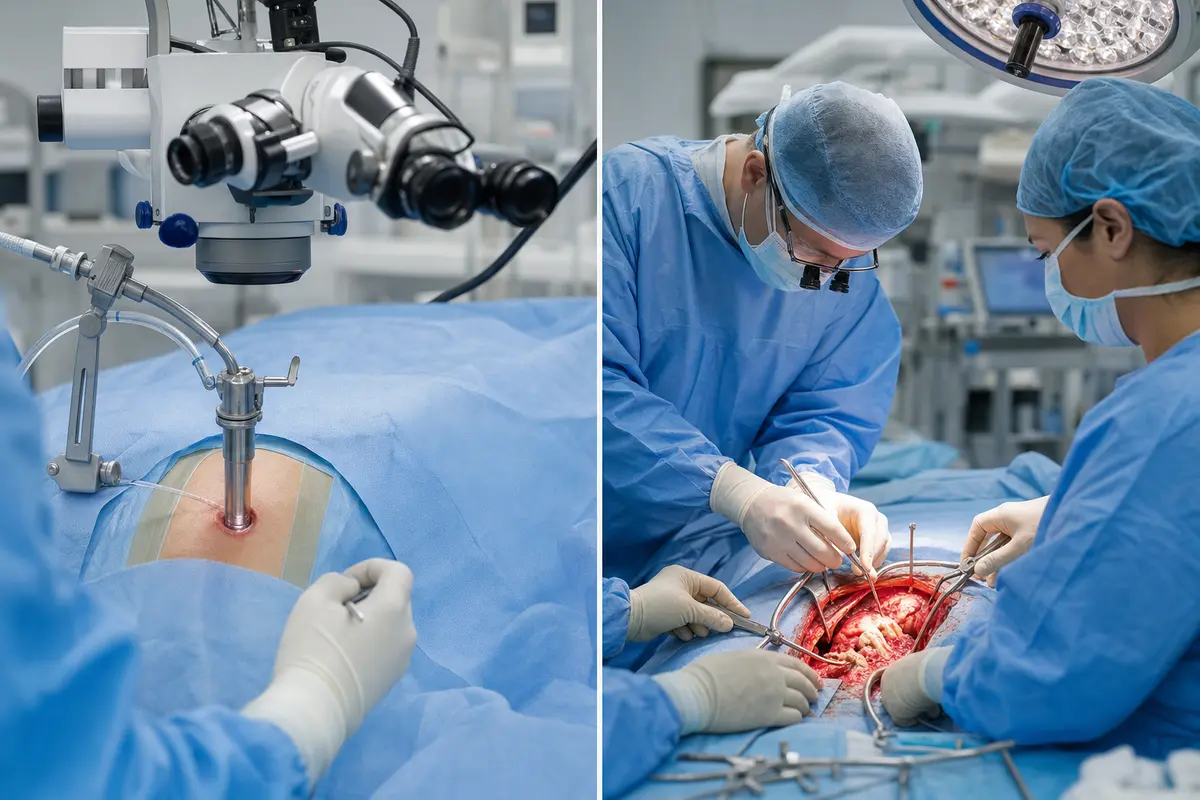
- ACDF (Anterior Cervical Discectomy and Fusion) — the most commonly performed cervical spine surgery. The disc is removed, the nerve is decompressed, and the segment is fused. Well-studied, reliable results.
- Cervical disc replacement (arthroplasty) — preserves motion at the operated level. May reduce the risk of adjacent-segment disease compared to fusion, though long-term data is still maturing.
- Posterior cervical foraminotomy — a motion-preserving option for lateral (foraminal) herniations without significant central compression.
My perspective: In my practice, I see many patients who have been recommended surgery after only a few weeks of symptoms and without a proper trial of conservative care. An independent second opinion can help clarify whether the timing is right.
Who Should Not Get Cervical Herniated Disc Surgery?
Surgery is not appropriate for everyone. Patients who may not benefit — or who face higher risks — include:
- Those with neck pain only (no arm symptoms, no neurological deficit) and a disc bulge on MRI. MRI findings alone are not a surgical indication.
- Patients with untreated depression or chronic pain syndromes, where surgical outcomes tend to be poorer.
- Those who have not completed a genuine trial of conservative care (at least 6–8 weeks of structured physiotherapy and pain management).
- Patients with significant medical comorbidities that increase surgical risk disproportionately to the expected benefit.
- Smokers, unless willing to stop — smoking significantly impairs fusion rates and wound healing.
Edge case: A patient with mild myelopathy and minimal symptoms presents a difficult decision. Some surgeons recommend early surgery to prevent progression; others advocate close monitoring. This is exactly the kind of scenario where a second opinion adds real value.
Alternative Treatments for Cervical Herniated Disc Besides Surgery
Beyond standard physiotherapy and medication, several complementary approaches are used, though evidence quality varies.
- Acupuncture — some patients report short-term pain relief; evidence is limited but it is generally safe.
- Osteopathy or chiropractic manipulation — gentle mobilisation may help with pain and stiffness. Avoid high-velocity cervical manipulation, which carries a small but real risk of vascular injury.
- Pilates and yoga — can improve posture and core stability, but should be modified to avoid excessive neck extension or loading.
- TENS (transcutaneous electrical nerve stimulation) — may provide temporary pain relief; low risk.
- Cervical traction — intermittent traction can reduce radicular symptoms in some patients. Best used under professional supervision.
What I advise: Use these as adjuncts to, not replacements for, a structured physiotherapy programme. If someone is offering a "miracle cure" for your disc, be sceptical.
Common Mistakes People Make When Treating a Cervical Herniated Disc
Over the years, I've seen the same errors repeated:
- Relying on MRI alone to make decisions. A disc herniation on MRI without matching symptoms is often incidental. Treatment should be guided by clinical correlation.
- Rushing to surgery. Unless myelopathy or severe progressive weakness is present, conservative care deserves a proper trial.
- Avoiding all physical activity. Fear of movement (kinesiophobia) delays recovery. Guided exercise is one of the most effective treatments available.
- Ignoring red flags. On the other end, some patients delay seeking help when they develop signs of spinal cord compression.
- Not seeking a second opinion. Surgical recommendations vary significantly between surgeons. An independent review of your imaging and clinical history can provide clarity.
- Over-relying on passive treatments. Massage, heat packs, and injections alone won't build the strength and stability your neck needs for long-term recovery.

Average Cost of Cervical Herniated Disc Treatment
Costs vary enormously depending on your country, healthcare system, and whether treatment is conservative or surgical. I won't cite specific figures because they differ so widely, but here is a general framework:
Practical tip: If you're considering surgery abroad or weighing options across different healthcare systems, an online second opinion can help you understand whether the proposed procedure is appropriate before you commit to travel and expense.
What Activities Should I Avoid with a Cervical Herniated Disc?
During the acute phase (first 2–4 weeks), avoid activities that increase disc pressure or provoke nerve irritation:
- Heavy lifting, especially overhead
- High-impact sports (running on hard surfaces, contact sports)
- Prolonged static neck positions (long drives, extended screen time without breaks)
- Aggressive neck stretching or cracking
- Diving or activities with risk of sudden neck impact
As symptoms improve, most activities can be gradually reintroduced. The goal is not permanent restriction but a phased return guided by symptoms and function.
How to Prevent Future Cervical Herniated Discs
Prevention is about reducing mechanical stress on the cervical spine and maintaining the health of the supporting structures.
- Maintain good posture — keep your screen at eye level, avoid forward head posture
- Exercise regularly — neck and upper back strengthening, plus general cardiovascular fitness
- Take breaks — if you work at a desk, move every 30–45 minutes
- Don't smoke — smoking accelerates disc degeneration
- Manage your weight — excess weight increases spinal loading
- Sleep with proper support — a supportive pillow that keeps the cervical spine neutral
When to Consider an Online Second Opinion
If you've been told you need cervical spine surgery, an independent second opinion is one of the most practical steps you can take. This is especially true if:
- You've had symptoms for less than 6 weeks and haven't completed structured conservative care
- The recommendation is based primarily on imaging findings without a thorough neurological examination
- You're unsure whether ACDF, disc replacement, or continued conservative care is the best path
- You're seeking treatment abroad and want an independent assessment before travelling
As a spine surgeon who provides online second opinions, I review patients' MRI scans, clinical histories, and current treatment plans to offer an independent perspective. This is not a replacement for in-person examination — I always make that clear — but it can help you make a more informed decision about whether and when surgery is appropriate.
Frequently Asked Questions
Is a cervical herniated disc the same as a slipped disc?
"Slipped disc" is a common but inaccurate term. The disc doesn't actually slip out of place — the inner material pushes through a tear in the outer ring. Cervical herniated disc, disc prolapse, and disc protrusion are more precise terms used by clinicians.
Can I fly with a cervical herniated disc?
Generally yes. Flying does not worsen a herniation. However, prolonged sitting in a cramped position can aggravate neck pain. Use a supportive neck pillow and move your neck gently during the flight.
How soon after surgery can I return to work?
This depends on the type of surgery and your job. After ACDF, many patients with desk jobs return within 2–4 weeks. Physically demanding work may require 6–12 weeks. Your surgeon should provide individualised guidance.
Will I need to wear a neck brace?
Some surgeons prescribe a soft collar for comfort after ACDF, typically for 2–6 weeks. After disc replacement, a brace is less commonly needed. For conservative treatment, prolonged brace use is generally discouraged because it can weaken neck muscles.
Can a cervical herniated disc cause headaches?
Yes. Upper cervical disc problems (C2–C3, C3–C4) can refer pain to the back of the head. However, headaches have many causes, so a proper assessment is important before attributing them to a disc.
Is cervical disc replacement better than fusion?
Both are effective. Disc replacement preserves motion and may reduce stress on adjacent levels. Fusion is more established and has longer follow-up data. The best choice depends on your age, the number of levels affected, and whether you have instability or facet joint disease. This is a decision that benefits from detailed discussion with your surgeon.
Conclusion
Cervical herniated disc treatment in 2026 follows a clear, evidence-based pathway: start with structured conservative care, monitor closely for neurological red flags (especially myelopathy), and reserve surgery for cases where it is genuinely indicated. The majority of patients recover without an operation.
Your next steps:
- If you have new symptoms, see a qualified clinician for a proper neurological examination — not just an MRI.
- Commit to a structured physiotherapy programme for at least 6–8 weeks before considering surgery.
- Watch for red flags: progressive weakness, gait problems, hand clumsiness, or bladder changes. These warrant urgent evaluation.
- If surgery has been recommended, consider an independent online second opinion to confirm the diagnosis and the appropriateness of the proposed procedure.
- Stay active within your limits. Guided movement is medicine for your spine.
I see patients every week who were told they needed urgent surgery but, after proper conservative care and a second opinion, recovered without an operation. I also see patients who genuinely need surgery and benefit enormously from it. The key is making sure you're in the right category before you commit. An informed patient is always in a stronger position.
This article is for educational purposes and does not constitute personal medical advice. Individual treatment decisions should be made in consultation with a qualified healthcare professional who has examined you in person.